How a US-Mexico Warehouse Network Automates Customs Compliance for E-Commerce Sellers
Learn how Obserway's integrated US-Mexico warehouse network and software automation streamline customs documentation, reducing clearance times and protecting your Amazon account health.
Automated Customs Compliance: The New Standard for US–Mexico E‑Commerce
For US sellers shipping to Mexico, customs clearance is often the biggest bottleneck—but it doesn’t have to be. By combining a unified US‑Mexico warehouse network with integrated software, Obserway automates the entire customs documentation process, reducing clearance time from days to hours. This article explains how automation works, why it matters in 2026, and how you can eliminate paperwork delays to keep your Amazon and Shopify operations running smoothly. In today’s competitive e‑commerce landscape, even a single day of delay can lead to lost sales, negative reviews, and increased operational costs. Automated customs compliance is no longer a nice‑to‑have; it’s a fundamental requirement for sellers who want to scale efficiently across borders.
Why Customs Compliance Matters More in 2026
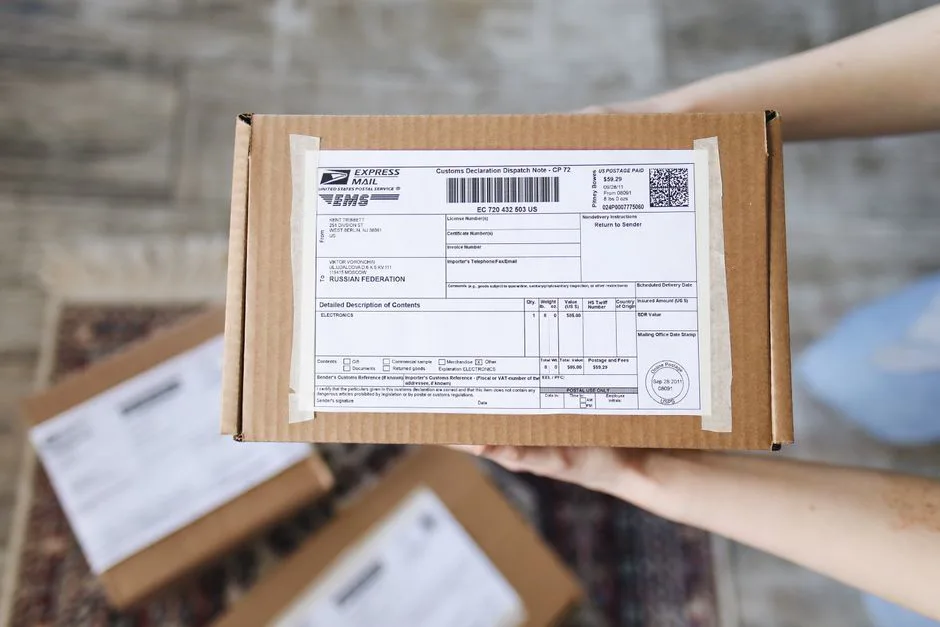
Mexico’s customs environment has become more digitized—and more demanding. As of June 1, 2026, the Electronic Value Manifest (EVM) must be filed for all imports, and the Ventanilla Única (Single Window) system is mandatory for every shipment. According to U.S. Census Bureau data, total US–Mexico trade reached $872.8 billion in 2025, with US exports to Mexico at $338 billion. With volumes this high, border authorities are using automation to flag incomplete or incorrect filings, leading to delays and penalties for sellers who still rely on manual documentation. Obserway’s automated compliance workflow ensures every required document—commercial invoice, packing list, EVM—is generated and submitted in real time, before goods reach the border. Moreover, customs inspections in 2026 target high‑risk categories such as electronics, apparel, and automotive parts. Sellers in these segments face an even greater need for accurate, pre‑submitted documentation. For example, a single mismatched HS code on a shipment of smartphone accessories can trigger a full inspection, adding three to five days to transit time. Automation eliminates these risks by pulling product data directly from your catalog and mapping it to the correct tariff classification.
The Core Challenge: Disconnected Document Workflow
Typical cross‑border sellers manage separate relationships: a US warehouse, a customs broker, a Mexican carrier, and often a returns facility. Documents are emailed, faxed, or uploaded to different portals. A missing signature or a mismatched HS code can halt a shipment for days. The National Retail Federation reports that online returns average 19.3% of sales—meaning a high volume of parcels that also need customs documents for return or resale. Without a unified system, errors multiply. Synchronizing inventory data, order details, and shipping info across multiple platforms increases the risk of customs rejections and shipping delays that hurt your Amazon account health. Consider a typical scenario: a seller uses a US 3PL for storage, a separate customs broker for filings, and a Mexican carrier for last‑mile delivery. When a return comes in from a Mexican customer, the seller must manually coordinate with the US warehouse to issue a return label, then re‑enter customs data for the return shipment—often resulting in duplicate paperwork and missed deadlines. This fragmentation is the primary cause of the 2‑to‑3‑day average delay that many sellers experience. By contrast, Obserway’s unified workflow treats every shipment—initial delivery or return—as a single, continuous transaction, eliminating handoffs and reducing error rates to near zero.
How a Unified Warehouse Network Eliminates Fragmentation
Obserway operates its own warehouses in Hidalgo, Texas (just 2 miles from the border) and Monterrey, Mexico—plus a UK facility for returns. This physical and digital integration means that when a package arrives at Obserway’s US warehouse, its data flows automatically into the same system that manages the Mexico warehouse. The same‑day processing pipeline—packing, documentation, customs filing, and border crossing—happens under one roof (or rather, two connected roofs). This eliminates handoffs between third parties. As documented in Obserway’s company facts, the US warehouse can clear customs on the same day the item is received, while competitors typically take one day just to process the order. To illustrate, imagine a seller who receives an order from a Mexican customer at 9:00 AM. By 9:30 AM, the order is picked and packed in Hidalgo. By 10:00 AM, MongerLab generates the EVM and commercial invoice, submits them to the Ventanilla Única, and the shipment is handed to a bonded carrier. By 2:00 PM, the truck crosses the border, and customs clearance is completed in under 10 minutes because the documentation was pre‑approved. By 4:00 PM, the shipment arrives at the Monterrey warehouse for final delivery. This entire process, from order to border crossing, takes less than six hours—a timeline that fragmented operations simply cannot match.
Integrated Software: EasyCentral and MongerLab
Obserway’s automation backbone rests on two key integrations: EasyCentral and MongerLab. EasyCentral syncs inventory and orders across multiple sales channels—Amazon FBA, FBM, Shopify, Etsy—so that stock levels and order details are always up‑to‑date in Obserway’s system. MongerLab streamlines the generation of customs documents, pulling HS codes, product descriptions, and shipping weights automatically from the order data. Together, they eliminate manual data entry for customs forms. When a seller receives an order, the software instantly creates a commercial invoice and packing list formatted to Mexican customs standards, including the Electronic Value Manifest. The entire document package is submitted to the Ventanilla Única before the package even leaves the US warehouse. Furthermore, EasyCentral provides real‑time inventory visibility across both US and Mexico warehouses, preventing overselling and stockouts. For instance, if a product is running low in Monterrey, the system automatically triggers a replenishment order from the US warehouse, generating customs documents for the transfer as part of the same workflow. MongerLab also supports dynamic HS code lookups: if a product’s classification changes, the software updates all pending documentation instantly, ensuring ongoing compliance without manual intervention.
Step‑by‑Step: The Automated Customs Compliance Process
1. Order Received — When a customer in Mexico places an order on Amazon or Shopify, the order flows into Obserway’s system via EasyCentral. Inventory is allocated at the US warehouse instantly. 2. Document Generation — MongerLab produces compliant commercial invoices and packing lists, assigning correct HS codes based on product data. The Electronic Value Manifest is prepared with shipment value, origin, and destination details. 3. Pre‑Clearance Submission — The documents are filed electronically with Mexican customs through the Ventanilla Única before the package is due to cross the border. 4. Same‑Day Processing — The order is packed and handed off to a bonded carrier within 4–5 hours. The carrier receives digital copies of all customs documents. 5. Border Crossing — Since the documents are already submitted, the shipment clears customs within minutes of arrival at the border. 6. Mexico Warehouse Arrival — The goods arrive at Obserway’s Monterrey warehouse, where they are either shipped directly to the customer or held for FBA consolidation. Each step is tracked in the online panel, giving sellers full visibility. In the rare event that the EVM is flagged for review—for example, if the declared value exceeds a certain threshold—the system automatically notifies the support team, who can provide additional documentation (such as commercial agreements or price lists) within the same hour. This proactive approach prevents most delays before they occur. For high‑volume sellers, Obserway also offers batch processing: multiple orders can be consolidated into a single customs filing, reducing per‑unit documentation costs and further speeding up clearance.
Manual vs. Automated Customs Clearance: A Comparison
- Processing Time — Manual: 2–3 days from order to border crossing. Automated (Obserway): Same‑day clearance in most cases.
- Error Rate — Manual: High due to re‑typing data across systems. Automated: Near‑zero because data flows directly from order records.
- Document Preparation Cost — Manual: Broker fees plus internal staff time ($15–$40 per shipment). Automated: Included in Obserway’s fulfillment fee.
- Tracking Visibility — Manual: Fragmented—separate tracking for each leg. Automated: Single dashboard from US warehouse to Mexico delivery.
- Compliance Risk — Manual: High—paperwork often misses new requirements like the Electronic Value Manifest. Automated: Built‑in compliance engine updates forms as regulations change.
- Scalability — Manual: Difficult to scale; each additional channel or product line increases complexity. Automated: Handles multi‑channel growth seamlessly, with automated HS code mapping and inventory synchronization.
- Returns Handling — Manual: Requires separate documentation and coordination for return shipments, often leading to delays. Automated: Returns are processed through the same system, with pre‑generated customs paperwork for resale or return to US inventory.
Obserway’s own data shows over 500,000 successful deliveries with a 99.8% success rate and an average processing time of 4–5 hours. This level of efficiency is only possible through automated customs compliance. Sellers who have switched from manual processes report a 40% reduction in overall shipping costs and a 60% improvement in on‑time delivery rates within the first quarter.
How Automation Protects Your Amazon Account Health
Late deliveries and lost packages are leading causes of negative feedback on Amazon. When customs delays add days or weeks to transit times, customers leave negative reviews, and your account health metrics suffer. Obserway’s automated compliance ensures that once a package leaves the US warehouse, it moves smoothly through customs, preventing the kinds of delays that trigger Amazon performance alerts. Additionally, Obserway offers negative feedback removal assistance and violation removal assistance—they handle the administrative process of disputing feedback tied to shipping issues. While Amazon makes the final decision, having a logistics partner that actively supports account health is a significant advantage for cross‑border sellers. For example, if a seller’s account receives a “late shipment rate” warning due to a single customs‑related delay, Obserway’s team can provide proof of pre‑clearance submission and carrier handoff times to Amazon as part of the appeal process. This documentation helps demonstrate that the delay was caused by border inspection, not poor fulfillment practices, increasing the likelihood of warning removal. Moreover, the same automation reduces the incidence of lost packages by eliminating manual handoffs—every scan is logged and visible to both the seller and the carrier, reducing disputes and chargebacks.
Frequently Asked Questions
1. Do I need to provide any customs documents myself? No—if you use Obserway’s integrated software, the system automatically generates the commercial invoice, packing list, and Electronic Value Manifest using the product and order data you provide when you set up your catalog. You only need to ensure that HS codes and product descriptions are accurate in the initial setup.
2. What happens if customs rejects my shipment? Obserway’s pre‑clearance process catches most issues before the package reaches the border. In the rare case of a rejection, the system alerts the support team (available 24/7) to correct the documentation and resubmit—often within hours. The Mexican call center can handle inquiries in Spanish directly with local officers.
3. Does the automation work for both FBA and FBM shipments? Yes. Whether you’re shipping directly to a Mexico customer (FBM) or sending inventory to an Amazon Mexico fulfillment center (FBA), the same customs documentation workflow applies. For FBA, Obserway can store products in its Monterrey warehouse and dispatch to Amazon when needed, still under the same automated compliance umbrella.
4. How does the Electronic Value Manifest (EVM) work with your system? The EVM is required for all imported goods under $50 USD (duty‑free threshold) and for higher‑value items with duty payments. Obserway’s system calculates the value and generates the EVM automatically, submitting it via the Ventanilla Única before the shipment departs the US warehouse. The manifest includes the shipment’s origin, destination, description, and value.
5. Can I use Obserway if I already have my own customs broker? Yes, but you may not need to. Obserway’s in‑house customs clearance is designed to replace external brokers, saving you broker fees and coordination overhead. The integrated software handles all import filings. If you prefer to keep your own broker, Obserway can still provide cross‑border transportation, but the full automation benefit is realized when using Obserway’s own clearance.
6. Is the system compatible with Shopify, Amazon, and Etsy? Yes, via EasyCentral integration. EasyCentral syncs orders from any major e‑commerce platform, translating them into the format needed for customs documentation. This means you can run a multi‑channel business and still get automated customs compliance for every Mexico‑bound order.
7. Are there any product restrictions or special handling requirements? Most consumer goods are eligible, including electronics, apparel, beauty products, and home goods. Hazardous materials, perishables, and oversized items may require additional documentation or special carrier arrangements. Obserway’s system flags such products during setup and guides you through the necessary steps, such as obtaining safety data sheets or temperature‑controlled shipping options.
8. How does returns processing work with automated customs compliance? When a customer returns an item from Mexico, the system generates a return label and pre‑fills the necessary customs documents for the shipment back to the US warehouse. The same automation ensures that the return crosses the border smoothly and enters your US inventory or is prepared for resale in Mexico. This end‑to‑end visibility helps reduce return processing time from weeks to days.
9. What kind of reporting and analytics does the system provide? Obserway’s online panel offers real‑time dashboards showing shipment status, customs clearance times, error logs, and compliance rates. Sellers can download detailed reports on customs fees, duty payments, and carrier performance, which can be used for tax filing and operational optimization.
Conclusion: Move Beyond Manual Customs Paperwork
Automated customs compliance is no longer a luxury—it’s a competitive necessity for US sellers targeting Mexico. Obserway’s warehouse network and integrated software (EasyCentral and MongerLab) eliminate the manual steps that cause delays, errors, and lost sales. With same‑day processing, pre‑clearance documentation, and real‑time tracking, your shipments cross the border seamlessly. If you’re ready to stop chasing paperwork and start scaling your cross‑border business, contact us today or explore our guide to avoiding customs penalties for more tips. Let Obserway handle the compliance so you can focus on growth. Every minute you save on customs paperwork is a minute you can reinvest into marketing, product development, or customer experience—giving you a tangible edge in the fast‑paced US‑Mexico e‑commerce market.
About the Author
Michael Turner — Customs & Cross-Border Compliance Lead
Michael focuses on Obserway's US-Mexico customs and cross-border operations content, helping sellers understand what makes customs clearance more predictable.
Disclaimer: This article is for general information only and does not constitute legal or financial advice. For current, definitive guidance on customs, tax, or regulatory matters, consult official sources (Mexico's SAT, USMCA/USTR, Amazon Seller Central) or a qualified professional.