AI-Powered Product Sourcing for Dropshipping to Mexico: How to Avoid Customs Delays and Maximize Duty-Free Shipments
Learn how AI-powered product sourcing can help US dropshippers avoid customs delays and maximize duty-free shipments to Mexico. Discover a step-by-step pipeline that combines AI screening with Obserway's cross-border warehouse network for seamless, profitable operations.
Every dropshipper selling from the US to Mexico knows the frustration: you find a hot product, it ships fast, but then it gets stuck in customs—or worse, hit with unexpected duties that eat your margin. The root cause often isn't your shipping process—it's your product selection. In 2026, with Mexico's new Electronic Value Manifest requirement and rising enforcement, choosing the wrong product can cost you days and dollars. But there's a smarter way: AI-powered product sourcing that pre-screens items for customs compliance, duty-free eligibility under USMCA, and logistics fit. When combined with a unified cross-border warehouse network, this approach turns product selection from a guessing game into a predictable profit engine.
Why Customs Compliance Starts with Product Selection
Many sellers think customs is a shipping problem—that once you hand off the package, it's out of your hands. In reality, the product itself determines clearance speed and cost. Mexico's de minimis thresholds under USMCA allow duty-free entry for shipments under $117 USD for goods of US origin, and tax-free up to $50 USD. But not every product qualifies. Items like electronics, textiles, and cosmetics often face additional inspections or duties, even if under the threshold. Also, products requiring special permits (e.g., FDA-equivalent approvals like COFEPRIS for food or medical devices) can be held indefinitely. For example, a seller importing vitamin supplements might need a sanitary registration number that takes weeks to obtain, causing the shipment to be seized until paperwork is complete. Even seemingly safe items like ceramic mugs can be flagged if they contain lead-based glazes not compliant with Mexican standards. By using AI to evaluate each potential product against these rules before adding it to your store, you eliminate the biggest hidden risk in cross-border dropshipping. AI can cross-reference Mexico's tariff schedules and import restrictions from sources like the Secretaría de Economía, ensuring that only compliant products enter your pipeline. This proactive selection not only avoids delays but also reduces the need for costly broker interventions later.
How AI Analyzes Products for Duty-Free Eligibility
AI tools can scrape supplier data, HS codes, and country-of-origin info to predict whether a product will clear customs smoothly. For example, an AI model trained on thousands of clearance events can flag products with high inspection rates (like power banks or dietary supplements). It can also calculate the estimated duty + tax using current exchange rates and compare it to your target margin. The AI doesn't just look at the product name; it digests the full description, materials, and intended use. For instance, a "leather wallet" might be classified under HS code 4202.31, which has a 20% duty if not USMCA-qualified, while a "synthetic wallet" in the same category might fall under a different subheading with different rules. The AI can also factor in seasonal fluctuations—during Mexico's peak holiday season, certain electronics face higher inspection rates due to counterfeit concerns. Obserway's platform integrates with EasyCentral and MongerLab to feed these insights directly into your inventory decisions. The AI doesn't just find trending items—it finds trending items that are legally optimized for your target market. Moreover, AI can simulate "what-if" scenarios: if the exchange rate shifts by 5%, how does that affect duty-free eligibility? Such dynamic analysis keeps your product mix profitable even as market conditions change.
Steps to Set Up an AI-Driven Product Sourcing Pipeline for Mexico
Here's a practical workflow for automating product selection with AI:
- Step 1: Connect your supplier feeds (AliExpress, CJ, etc.) to an AI sourcing tool. Ensure the tool supports real-time data updates so new products are evaluated immediately.
- Step 2: Set filters: US origin (for USMCA benefits), weight under 2 kg (lower shipping cost), unit price under $100 (to stay under duty-free threshold). Also, filter by product category—remove any category known for high inspection rates, such as "cosmetics with alcohol" or "batteries over 20Wh."
- Step 3: The AI cross-references each product against a customs database—flagging any with high-risk attributes (e.g., lithium batteries, cosmetics containing alcohol). It also validates the HS code using a probabilistic model: if the supplier's HS code seems off (e.g., a "phone case" listed under "electronics" instead of "plastics"), the AI suggests a correction and recalculates duties.
- Step 4: Only approved products pass to your store listing, with automated pricing adjusted for any unavoidable duties. For example, if a product has a 5% duty that cannot be avoided, the AI automatically includes that in the final selling price to maintain your margin.
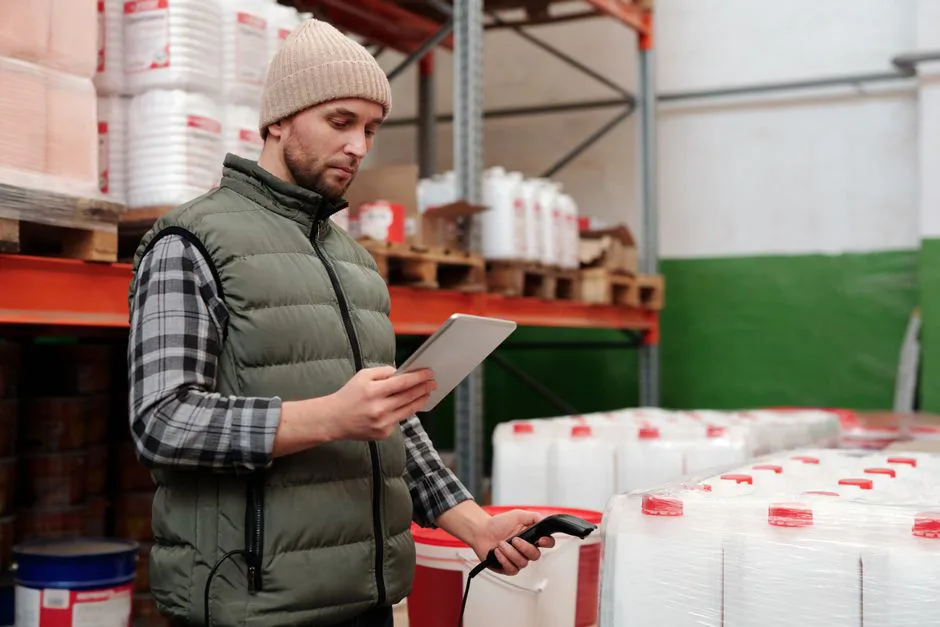
- Step 5: When an order comes in, the warehouse (like Obserway's Hidalgo, TX location) receives the package, verifies compliance again (physical inspection for quantity, condition, and label accuracy), and ships it with the correct customs documentation. The warehouse also updates the AI with real-time clearance data, creating a feedback loop that improves future selections.
This pipeline can run on autopilot, updating in real time as regulations change. For instance, if Mexico imposes a temporary ban on certain textile imports, the AI instantly blocks all related products from being listed, preventing last-minute compliance failures.
Integrating AI Sourcing with a Unified Warehouse Network
AI-driven product selection is only half the equation. Without a warehouse partner that can physically execute cross-border compliance, the insights remain theoretical. Obserway's network of US (Hidalgo, TX) and Mexico (Monterrey) warehouses enables a seamless flow: US-sourced products arrive at the border warehouse, are inspected and repackaged if needed, then cleared through customs—often on the same day. This speed matters because de minimis calculations can change with exchange rates; a product that was duty-free yesterday might not be tomorrow. With a responsive warehouse, you can adjust your sourcing strategy in hours, not weeks. For example, if the peso weakens suddenly, a product that was priced at $110 USD might now exceed the $100 threshold after conversion—the AI flags it, and the warehouse can delay shipment or reroute to a different buyer until the exchange stabilizes. Additionally, a unified warehouse network allows for consolidation: multiple small orders from the same supplier can be combined into one shipment, splitting customs fees and reducing per-unit costs. Obserway's Monterrey hub also performs last-mile delivery, cutting transit times by up to 48 hours compared to shipping from the US border directly to a Mexican address.
Real-World Scenario: A Shopify Store Optimizing Its Product Mix
Imagine a Shopify store selling kitchen gadgets to Mexico. The owner uses an AI tool to analyze 500 potential products. The AI flags 30% as high-risk due to material restrictions or country-of-origin issues (e.g., non-US origin means no duty-free). It also identifies 20% that are likely to incur duties above $10 per unit, crushing margins. After filtering, only 50 products remain fully optimized. The store lists them, and within a month, the average customs delay drops from 5 days to 1 day, and duty costs fall by 40%. But the real win comes from the feedback loop: the AI notices that a particular product category (say, "garlic presses") has a zero inspection rate, so the owner expands that line. Conversely, "electric knife sharpeners" show a 10% inspection rate despite being under $100—the AI suggests switching to manual sharpeners, which have no electronics and thus fewer restrictions. The store also uses Obserway's warehouse to test new products: a small batch of 20 units is sent to Hidalgo, and if the clearance rate is above 95% after 30 days, the product is scaled. This iterative approach reduces risk and maximizes margin.
Manual vs. AI-Driven Sourcing: A Side-by-Side Comparison
- Speed: Manual research takes 3-5 hours per product—including searching for HS codes, reading tariff schedules, and checking supplier reviews; AI does it in seconds, processing hundreds of products in a single batch.
- Accuracy: Human error in HS code classification leads to misdeclaration penalties; AI trained on customs data reduces errors by up to 80%. For instance, misclassifying a "LED lamp" as "lighting fixture" instead of "electric lamp" can double the duty rate—AI catches such nuances because it references Mexico's tariff classification rulings.
- Scalability: One person can manage 100 products manually if they work full-time on sourcing; with AI, they can manage 10,000+ while also handling other tasks like marketing and customer service.
- Cost: Manual sourcing misses duty costs, averaging $15 per shipment in unexpected fees; AI pre-screening cuts that to near zero for compliant products. Additionally, AI reduces the need for customs brokers by pre-validating documentation, saving $20-$50 per shipment.
- Adaptability: When regulations change (like Mexico's 2026 Electronic Value Manifest), manual processes lag—sellers often learn about new requirements weeks after they take effect; AI updates immediately, pulling data from government feeds and trade alerts. For example, if a new "anti-dumping" duty is placed on Chinese-origin kitchenware, the AI automatically excludes any product with that origin, even if the supplier claims "US-origin" but the raw materials are Chinese.
Frequently Asked Questions
How does AI know which products will be inspected by Mexican customs?
AI models are trained on historical customs exam data, tariff schedules, and trade alerts. They identify patterns—like categories (e.g., "ceramic knives") that have a high exam rate in Mexico. While no system can guarantee 100% avoidance, AI significantly reduces the odds of surprise holds. Additionally, AI integrates with Mexico's "Sistema de Comercio Exterior" to monitor real-time inspection priorities, such as during holiday crackdowns on counterfeit electronics.
Can I use AI sourcing if I only sell on Amazon?
Absolutely. AI tools integrate with Amazon's catalog via API. You can analyze your existing FBA/FBM inventory or potential new ASINs. Obserway's software integrations with EasyCentral and MongerLab allow you to sync compliance checks directly with your Amazon listings. For example, if you sell on Amazon Mexico, the AI can flag products that Amazon's own compliance team might miss, such as items requiring NOM (Norma Oficial Mexicana) certification for electrical safety.
What if my product is made in China but shipped from the US? Does it qualify for USMCA?
No. USMCA duty-free treatment requires the product to be wholly obtained or substantially transformed in the US, Canada, or Mexico. Products of Chinese origin are subject to regular tariffs—even if shipped from a US warehouse. AI sourcing can flag this and suggest alternative suppliers. For instance, if you source a "yoga mat" from a US distributor that imports from China, the AI will classify it as Chinese origin and calculate the applicable duty (often 10-15%). However, it can also recommend a US-based manufacturer that makes mats from US-sourced raw materials, unlocking duty-free entry.
How does the Electronic Value Manifest affect my product selection?
Starting June 2026, all shipments to Mexico require an electronic manifest filed before arrival. This includes detailed product descriptions, HS codes, and values. If your product data is inaccurate (e.g., wrong classification), the manifest will be rejected. AI sourcing ensures your product data is correct at listing, avoiding manifest delays. The AI can also generate the manifest data automatically, populating fields like "product weight" and "value in MXN" based on real-time exchange rates, reducing manual entry errors.
Do I need a special AI tool for Mexico, or can generic ones work?
Generic AI sourcing tools (like Inventory Source or Modalyst) offer basic trend analysis but often lack customs-specific features. For Mexico, you need a tool that understands USMCA rules, Mexican tariff classifications, and the latest regulatory updates. Some platforms now offer Mexico-specific modules, or you can build a custom workflow using MongerLab's data feeds. Obserway also provides a compliance API that you can plug into any AI tool, adding Mexico-specific filters for HS codes, duty rates, and restricted item lists.
How does Obserway support AI-driven sourcing?
Obserway provides the logistics backbone that makes AI sourcing actionable. Our warehouses in Hidalgo and Monterrey are equipped to handle products that meet your AI's compliance criteria. We process shipments same-day, manage customs clearance, and can store products in Mexico for faster last-mile delivery. Plus, our integrations allow your AI tool to track real-time inventory and fulfillment status. For example, if your AI identifies a new high-margin product, we can set up a dedicated bin in our Hidalgo warehouse within 24 hours, ready to receive and ship orders.
What happens if a product passes AI screening but still gets flagged by customs?
While AI significantly reduces risk, no system is perfect. In such rare cases, Obserway's warehouse team intervenes immediately. We have dedicated customs brokers on staff who can resolve documentation issues within hours. If the product is truly non-compliant, we can either return it to the supplier or store it in Mexico under a temporary import bond while you resolve the issue. The AI then updates its model with this new information to prevent similar products from being selected in the future.
Can AI help with post-clearance audits and duty refunds?
Yes. Advanced AI tools can track all your shipments' clearance outcomes and identify cases where you may have overpaid duties. For example, if a product was mistakenly classified under a higher duty rate, the AI can flag it and generate a refund request (known as a "devolución de impuestos"). Obserway's platform streamlines this process by storing all customs documentation digitally, making audit trails easy to retrieve. This can recover up to 5% of your total duty costs annually.
Conclusion: Build a Smarter Dropshipping Operation from the Start
AI-powered product sourcing isn't just a trend—it's becoming a necessity for cross-border dropshipping to Mexico. With tighter customs enforcement and growing competition, every margin point counts. By combining AI pre-screening with a unified warehouse network like Obserway's, you can eliminate the guesswork, reduce delays, and protect your profits. Whether you're on Shopify, Amazon, or Etsy, the same principle applies: choose your products with intelligence, not instinct. Start by auditing your current product mix with an AI tool—you might discover that a quarter of your products are dragging down your profitability. Then, partner with a logistics provider that can execute on compliance at the border and beyond. The future of cross-border dropshipping belongs to those who automate the invisible work of customs compliance. Ready to see how Obserway can integrate with your AI sourcing workflow? Visit our website or read our guide on avoiding customs penalties to get started.
About the Author
Sarah Bennett — Amazon Marketplace Operations Specialist
Sarah covers Amazon FBA/FBM seller operations and dropshipping workflows for the Mexico market, drawing on Obserway's operational perspective on the Amazon seller ecosystem.