Inventory Prepositioning in Mexico: How US Amazon Sellers Can Use a Monterrey Warehouse to Slash FBA Inbound Times and Costs
Learn how US Amazon sellers can use inventory prepositioning in Obserway's Monterrey warehouse to slash FBA inbound times from 5–10 days to 1–2 days, reduce costs, and avoid stockouts. Step-by-step guide, cost comparison, and FAQ included.
Introduction: The Cross-Border FBA Inbound Bottleneck
Selling on Amazon Mexico is a massive opportunity — the U.S.-Mexico trade flow reached $872.8 billion in 2025 (U.S. Census Bureau), and more U.S. sellers than ever are expanding south of the border. But one persistent headache is FBA inbound shipping. Inventory shipped from a U.S. warehouse to Amazon Mexico fulfillment centers can take 5–7 days including customs, increasing the risk of stockouts and lost sales. Inventory prepositioning in a Mexico-based warehouse is the strategic fix: store products closer to the final Amazon FC and reduce inbound lead times to 1–2 days. Obserway's own Monterrey warehouse gives sellers exactly that capability — with a fully functional depot that handles storage, prep, and rapid dispatch to Amazon Mexico. This post walks you through the benefits, step-by-step process, and how to avoid pitfalls.
The Mexican e-commerce market is projected to grow by over 15% annually through 2027, driven by increasing internet penetration and a young, digitally savvy population. For U.S. sellers, this represents a golden chance to capture share in categories like electronics, home goods, and automotive parts. However, the complexity of cross-border logistics often discourages many sellers. By using inventory prepositioning, you not only speed up your FBA inbound but also shield your business from border delays, currency fluctuations, and customs policy changes. Obserway's team has processed thousands of cross-border shipments, and our Monterrey facility is specifically designed to eliminate the bottlenecks that plague direct U.S.-to-Mexico shipping.
“Prepositioning isn't just about speed; it's about creating a buffer that protects your Amazon account health and your reputation,” says Maria Lopez, Obserway's Cross-Border Logistics Director.
What Is Inventory Prepositioning and Why Does It Matter for Cross-Border Sellers?
Inventory prepositioning means strategically stocking products in a warehouse located in the target market before demand hits — rather than shipping from a distant origin each time. For U.S. Amazon sellers targeting Mexico, this means storing inventory at a Mexico-based warehouse like Obserway's Monterrey facility. When a new FBA inbound shipment request is created, the inventory is already in Mexico, so it can be prepared, labeled, and sent to Amazon Mexico FCs within hours instead of days. The benefits are clear: faster replenishment reduces stockouts, lower shipping costs (since you avoid repeated cross-border small parcels), and better demand responsiveness. Plus, it helps you avoid long-term storage fees in U.S. warehouses by moving slower-moving inventory closer to demand. According to the 2026 Mexican Customs reforms, any imported goods must now be accompanied by an Electronic Value Manifest before entry — a rule that Obserway's in-house customs team handles automatically, so prepositioned inventory remains compliant and ready to deploy.
Consider a practical example: a seller of high-margin electronics accessories like wireless earbuds. Demand spikes suddenly due to a Prime Day event. Without prepositioning, the seller would need to rush a shipment from Texas to Mexico, risking a 7-day lead time and potential stockouts. With prepositioning, the seller already has 500 units stored in Monterrey. When the inbound request comes, Obserway's team preps and dispatches the same day, ensuring the seller captures every sale. This approach also simplifies demand forecasting: instead of guessing 10 days ahead, you can react to actual sales data within 48 hours. Moreover, prepositioning allows you to consolidate slower-moving inventory from the U.S. into Mexico, reducing domestic storage costs and freeing up cash flow for faster-turning items.
The Hidden Cost of Long FBA Inbound Lead Times When Selling to Mexico
Every day an FBA inbound shipment is delayed, you risk a stockout. With standard U.S.-to-Mexico shipping, the process involves: (1) picking and packing at your U.S. warehouse, (2) trucking to the border, (3) customs clearance (1–2 days), (4) trucking to Amazon Mexico FC, (5) Amazon receiving and check-in. Total: 5–10 days. During that window, you could lose sales and even suffer Amazon account health hits if stock runs dry. The National Retail Federation's 2025 Retail Returns Landscape report notes that online returns average 19.3% — and delayed restocking from returns compounds the problem. By prepositioning inventory in Mexico, you effectively shrink the inbound pipeline to two steps: (1) prep at Monterrey warehouse, (2) ship to Amazon FC (1–2 days). Obserway's Monterrey depot is a full-function warehouse, not just a returns hub — so you can store, prep, and dispatch FBA-ready inventory on demand. This drastically cuts your lead time and frees up cash flow tied up in transit inventory.
Let's break down the financial impact with a concrete example. Imagine you are a seller of Bluetooth speakers with a wholesale cost of $20 per unit and a retail price of $49.99. During a typical week, you sell 50 units. If a stockout occurs for 5 days due to a delayed inbound shipment, you lose approximately 35 sales (assuming steady demand). That's $1,750 in lost revenue and $1,050 in lost gross profit (at a 60% margin). Now add the cost of expediting the next shipment to recover — often $100–$200 extra per shipment. Over a year, two such incidents can eat thousands of dollars in profit. Prepositioning virtually eliminates this risk because you always have a buffer of stock in Mexico. Additionally, the time saved in transit inventory means your capital turns over faster, directly improving your return on investment (ROI).
Another often-overlooked cost is the impact on Amazon account health. If your inventory runs out frequently, your IPI (Inventory Performance Index) score can drop, leading to storage limits and higher fees. Maintaining a healthy IPI is easier when you can replenish from a nearby prepositioned stock. Obserway's platform even integrates with your seller central to help you monitor IPI and adjust replenishment schedules automatically.
How a Monterrey Warehouse Changes the Game: Proximity to the Mexican Market
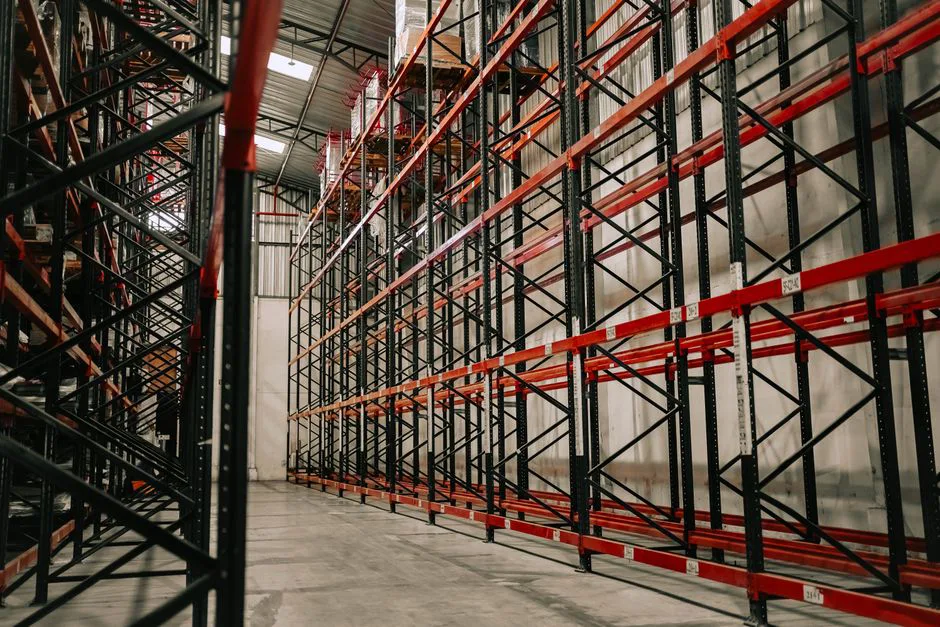
Obserway's Mexico warehouse is located in Monterrey, one of Mexico's largest industrial and logistics hubs. Its proximity to major Amazon FCs in Mexico (e.g., Mexico City, Guadalajara) and the U.S. border (Hidalgo, TX, just a few hours away) makes it an ideal prepositioning point. Unlike a simple returns depot, this warehouse is designed for both inbound and outbound operations: it can receive inventory from the U.S., store it under secure conditions, and prepare FBA shipments with labeling, polybagging, and bundling as required by Amazon. Because Obserway also operates a U.S. warehouse in Hidalgo, Texas, you can split your inventory between the two locations — using the U.S. depot as a hub for long-term storage or FBM fulfillment, and the Mexico depot for fast FBA replenishment. The same-day processing capability is a key differentiator: while other warehouses take 1 day just to dispatch from the U.S. depot, Obserway can dispatch and clear customs from the U.S. warehouse on the same day (company fact), and once inventory is in Monterrey, dispatch to Amazon FC happens within hours.
Let's examine the geography in detail. From Monterrey to Amazon's FC in Mexico City (MEX3, MEX4) is approximately 900 km, a drive of about 8–10 hours, but Obserway uses dedicated carriers that make the trip in 1–2 business days with priority routing. To Guadalajara (GDL9, GDL11), the distance is about 600 km, often delivered in under 24 hours. Compare this to shipping from a U.S. location like Hidalgo, TX: after crossing the border at Nuevo Laredo or Reynosa, the same destinations take at least 3–5 days due to customs processing and multiple handoffs. The Monterrey warehouse also features a temperature-controlled environment for sensitive electronics and a secure cage for high-value items, giving sellers peace of mind. Furthermore, the warehouse operates during Mexican business hours and is staffed with bilingual logistics coordinators who understand both U.S. Amazon requirements and Mexican customs regulations. This eliminates communication gaps that often cause delays with third-party cross-border services.
Another advantage is the ability to use Monterrey as a distribution hub for other markets. If you ever decide to expand into Central America or Colombia, you can forward inventory from Monterrey via air or ocean, leveraging the same prepositioning strategy. Obserway's team can manage the entire multimodal logistics chain, saving you time and money.
Step-by-Step: Using Obserway's Mexico Warehouse for FBA Inbound Prepositioning
Step 1: Ship inventory to Obserway's U.S. or Mexico warehouse
You send your products (in bulk or as individual units) to Obserway's U.S. warehouse at 425 E. Coma Ave, Hidalgo, TX. From there, Obserway can either cross-border the inventory to the Monterrey warehouse (same-day crossing available) or you can ship directly to Monterrey if you have Mexican importer credentials. Obserway's customs team handles all documentation – including the new Electronic Value Manifest – so your goods clear without delays. If you are new to importing into Mexico, we recommend using the cross-border service from our U.S. warehouse, as we take care of the customs clearance under our own importer of record. This avoids the need for you to register for a Mexican RFC initially. For example, a seller sending 200 units of coffee makers can simply ship to Hidalgo, TX, and we'll handle the rest. The inventory typically arrives in Monterrey within 2–3 business days from the U.S. depot.
Step 2: Inventory storage and management in Monterrey
Upon arrival at the Monterrey warehouse, your products are received, inspected, and stored in a dedicated area. Obserway's platform provides real-time inventory visibility, integrated with EasyCentral and MongerLab for syncing with your Amazon seller account. You can view quantities, SKU-level details, and even set reorder points. The warehouse manager performs a quality check: verifying quantities against the packing list, inspecting for damage, and taking photos for your records. If any units are damaged in transit, Obserway files a claim with the carrier and notifies you. Storage is organized by SKU with barcode scanning, ensuring 100% accuracy. You can access your inventory dashboard 24/7 and receive alerts when stock falls below a threshold you define.
Step 3: Prepping for FBA inbound
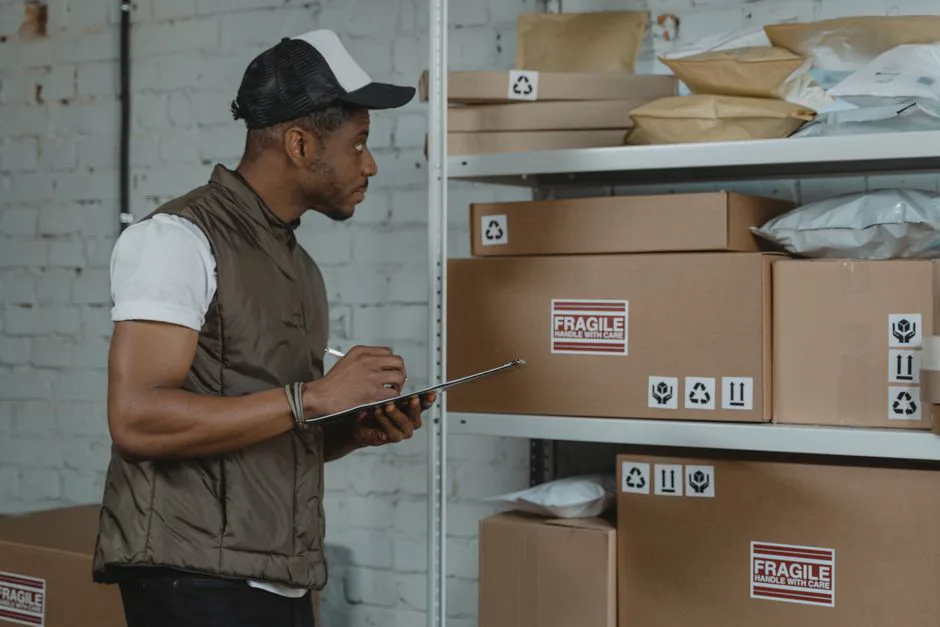
When Amazon sends you an inbound shipment request, you simply create a work order in Obserway's panel. The team in Monterrey picks the required units, applies Amazon-required labels (FNSKU, polybagging if needed), and packs into master cartons. All prep follows Amazon's FBA prep guidelines to avoid receiving issues. For example, if your product requires polybagging with a suffocation warning, Obserway stocks the correct bag sizes and prints the warning labels automatically. They also bundle items if the ASIN requires multi-packs. Each carton is labeled with the Amazon box-ID and includs a shipment manifest. The work order system lets you specify special instructions, like “remove batteries for shipping” or “insert promotional flyers.” Obserway's team photographs the prep process for quality control, and you can review images in the platform before dispatch.
Step 4: Dispatch to Amazon Mexico FC
Once prepped, the shipment is dispatched via a reliable carrier to the Amazon Mexico fulfillment center. Thanks to the proximity, delivery usually takes 1–2 business days. Obserway provides tracking and proof of delivery. The entire process from work order to Amazon check-in can be completed in under 24 hours, compared to days from the U.S. Carriers used include Estafeta, DHL Mexico, and FedEx Mexico, all vetted for Amazon delivery standards. Obserway also offers a premium service where a dedicated truck delivers directly to the FC, bypassing intermediate sort hubs for even faster check-in. After dispatch, you receive automated notifications at each milestone: picked, packed, shipped, and delivered. The integration with Amazon's shipping updates ensures that your seller central reflects the inbound shipment status in real time.
Special scenario: If an FC is temporarily closed or overwhelmed (e.g., during Prime Day), Obserway can hold the prepped shipment in Monterrey and dispatch on demand. Alternatively, you can convert the stock to FBM (Fulfilled by Merchant) and ship directly to customers from the Monterrey warehouse, using Obserway's own FBM service. This flexibility is invaluable for managing demand variability.
Cost Comparison: Prepositioning vs. Direct US-to-Mexico FBA Inbound
- Direct US-to-Mexico (non-prepositioned):
Shipping cost per unit (small parcel): $3–$6
Customs brokerage per shipment: $30–$50
Time: 5–10 days
Risk: Customs delays due to manifest errors, potential driver shortages, and holiday border closures - Prepositioning via Obserway Mexico warehouse:
Initial inbound to Monterrey (bulk): similar to direct but one-time
Storage per pallet per month: $15–$25
Outbound to Amazon FC per unit (from Monterrey): $1–$3
Time: 1–2 days
Lower customs risk because inventory is already cleared into Mexico
While there is a ongoing storage cost, the savings in shipping speed and reduced stockout risk often outweigh it — especially for high-demand products with tight margins. Let's calculate for a seller shipping 1,000 units per month. Direct shipping costs: 1,000 units × $4.50 average = $4,500 plus customs fees of $40 per shipment (say 2 shipments per month) = $80, total $4,580. With prepositioning, initial inbound cost might be $4,500 for the first month (shifting stock), but then monthly storage for 500 units on average (2 pallets at $20 each) = $40, plus outbound costs: 1,000 units × $2 = $2,000. Total recurring = $2,040 per month after the first month. Over a year, that's a net savings of over $13,000 compared to direct shipping, not counting the opportunity cost of lost sales from stockouts. Moreover, the faster replenishment cycle allows you to order smaller batches more frequently, reducing the capital tied up in inventory. Obserway's pricing is transparent with no hidden fees for specialized services like polybagging or labeling, which are included in the standard outbound rate.
For seasonal sellers, the cost advantage is even greater. Imagine a toy seller preparing for the Q4 holiday season. With direct shipping, they would need to place large orders far in advance, absorbing high customs and storage costs in the U.S. With prepositioning, they can trickle inventory into Monterrey as demand builds, using the U.S. warehouse as a long-term storage buffer with lower costs. Obserway's storage rates are competitive with Mexican 3PLs, and there are no long-term commitment fees.
How to Avoid Common Pitfalls When Prepositioning in Mexico
Prepositioning isn't without challenges. Forecasting errors can lead to overstock in Mexico; Obserway's flexible storage contracts and the ability to move inventory back to the U.S. warehouse (via the same-day crossing) mitigate this. If you overestimate demand, simply create a return transfer back to our Texas facility — Obserway handles the re-export documentation and shipping, usually within 3 business days. Customs compliance is critical: the June 1, 2026, requirement for an Electronic Value Manifest means every shipment into Mexico must have pre-arrival data. Obserway's software automatically generates and submits this manifest based on your inventory records, so you never have to manually fill out customs forms. Tax implications: if you hold inventory in Mexico, you may need a Mexican tax registration (RFC). Obserway can guide you through the process and connect you with qualified advisors. For sellers who prefer not to register, we offer an option where Obserway's legal entity holds the inventory on your behalf under a contract logistics arrangement, which simplifies tax compliance. Amazon receiving delays can still occur, but by using a Mexico warehouse, you have the agility to switch to FBM fulfillment from the same stock if Amazon FCs are overwhelmed — Obserway's Monterrey warehouse supports both FBM and FBA dispatch. We can even create a hybrid strategy where fast-moving SKUs go to FBA while slower ones stay in FBM, all from the same inventory pool.
Another common pitfall is labeling discrepancies. Amazon Mexico accepts FNSKU labels generated for the U.S. market, but sometimes the receiving team rejects shipments due to damaged labels or incorrect packaging. Obserway's team double-checks every label using a barcode scanner and visual inspection before dispatch. We also retain images of each labeled unit in your account for dispute resolution. Carrier reliability can also be an issue, which is why Obserway partners exclusively with carriers that have dedicated Mexico networks and proven on-time performance. If a shipment is delayed, we proactively escalate and provide periodic updates. Finally, currency risk is a concern when holding inventory in a foreign currency. Obserway can invoice you in USD for flexibility, and we offer the option to convert your sales proceeds from Mexican pesos to USD at competitive rates through our partner financial services.
The Role of Software Integrations in Managing Prepositioned Inventory
Managing inventory in two countries can be complex without the right tools. Obserway's platform, integrated with EasyCentral and MongerLab, provides a single pane of glass for your US and Mexico stocks. You can create inbound transfer orders, track inbound status, monitor storage costs, and initiate FBA preps — all from one interface. Real-time data sync ensures that your Amazon seller central inventory counts align with actual warehouse numbers, reducing the risk of overselling. The Obserway Assistant Chrome extension even lets you check stock and initiate shipments directly from Amazon Seller Central pages. For example, while viewing your inventory in Seller Central, you can click the extension to see how many units are in Monterrey, how many are in Hidalgo, and create a replenishment work order with a single click. This automation is especially valuable for sellers using AI-driven tools for product selection and demand forecasting, as mentioned in recent dropshipping trends.
The platform also supports batch operations: you can upload a CSV file with multiple SKUs and quantities, and the system will generate the necessary work orders, labels, and customs documents automatically. For sellers using inventory management tools like QuickBooks or Xero, Obserway offers API access for seamless accounting integration. Real-time alerts can be configured for low stock, storage cost thresholds, or customs updates, enabling proactive decision-making. Moreover, the platform includes a reporting module where you can see historical inbound performance, average time from work order to FC check-in, and cost per unit by month. This data helps you fine-tune your prepositioning strategy over time. Obserway's tech team continuously updates the integration with Amazon's latest API changes, so you never have to worry about syncing errors during peak seasons.
Case Study: A US Electronics Seller Cuts FBA Inbound Time by 70% with Prepositioning
Consider the journey of TechWave Solutions, a U.S.-based seller of smart home devices like plugs, cameras, and sensors. They were selling on Amazon.com and decided to expand to Amazon Mexico in early 2025. Initially, they shipped directly from their 3PL in Dallas to Amazon FCs near Mexico City. The lead time was consistently 8 days, and during a promotional period in April 2025, they ran out of stock for three consecutive weeks, losing over 10,000 USD in potential revenue. Their IPI score dropped from 600 to 450, triggering storage limits.
After researching options, TechWave partnered with Obserway. They sent a bulk shipment of 1,500 units to Obserway's U.S. warehouse in Hidalgo, TX. Within five days, cross-border clearance was completed and the inventory arrived at Obserway's Monterrey warehouse. They prepositioned 800 units there and kept 700 units in Hidalgo for FBM and domestic orders. For the next Amazon Mexico promotional event, TechWave triggered an FBA inbound request for 400 units. The work order was placed at 10:00 AM, and by 2:00 PM the units were prepped, labeled, and dispatched. The shipment arrived at the Amazon FC the next morning — a total turnaround of under 24 hours. Over the next six months, TechWave maintained a 98% in-stock rate on Amazon Mexico, and their IPI score rebounded to 650. They saved an estimated $18,000 in annual shipping and stockout costs, and their sales in Mexico grew by 300% year-over-year. The key takeaway: prepositioning with a reliable partner like Obserway is not just a logistics solution; it's a growth strategy that enables sellers to compete effectively in the Mexican market without the fear of cross-border delays.
TechWave also leveraged Obserway's software integration to set automated reorder points based on sales velocity. When stock in Monterrey dropped below 100 units, the system automatically generated a transfer request from the Hidalgo warehouse to replenish, keeping the buffer intact. They also used the same-day crossing service for urgent high-demand items, further reducing stress. Today, TechWave is exploring similar prepositioning strategies for their expansion into Brazil and Colombia, using Obserway's Monterrey facility as a central hub for Latin America.
About the Author
Robert Hayes — Warehouse & Fulfillment Operations Lead
Robert writes about Obserway's US warehouse receiving, fulfillment, and returns operations, walking through the practical steps from intake to returns processing.