From Border to Buyer: How a US-Mexico Warehouse Network Streamlines Cross-Border Fulfillment
Obserway's two-warehouse network (Hidalgo, TX and Monterrey, Mexico) enables same-day warehouse exit and customs clearance, simplifying cross-border fulfillment for US sellers targeting Mexico. Learn how this single-flow model cuts delays, reduces costs, and improves Amazon account health.
The Old Way: Fragmented Logistics, Endless Headaches
US-based sellers targeting Mexico have long juggled multiple vendors—a US warehouse for storage, a customs broker for clearance, a Mexican carrier for last-mile delivery, and a separate facility for returns. This fragmentation adds days to delivery times, increases the risk of customs delays, and makes it nearly impossible to track a shipment end-to-end. According to the U.S. Census Bureau, US-Mexico trade reached $872.8 billion in 2025, with Mexico becoming the top source of US imports. Yet many sellers still treat cross-border logistics as a series of handoffs rather than a single flow. The result? delayed Amazon FBA shipments, frustrated FBM customers, and account health penalties.
Consider a common example: a seller based in Dallas receives an order from a customer in Mexico City. They first ship the product to a US warehouse in Laredo, which takes one day to receive and process. Then they coordinate with a customs broker who requires 24 hours to prepare documentation. Once cleared, the shipment moves to a Mexican carrier’s cross-dock facility, where it waits another day for sorting. Finally, last-mile delivery takes one to two more days. That’s a minimum of four to five days in transit—and that’s without any delays at the border or errors in paperwork. Miss a single customs form, and the shipment can be held for inspection, adding days or even weeks. This fragmented model leaves sellers scrambling to manage multiple invoices, track separate tracking numbers, and handle customer complaints from both sides of the border.
Another overlooked pain point is returns. Without a dedicated Mexican returns address, sellers often instruct customers to ship items back to a US address—costing the seller significant cross-border shipping fees. According to a 2024 survey by the Cross-Border Ecommerce Council, 42% of US-Mexico sellers reported that returns logistics were their top operational challenge. The old way simply doesn’t scale as order volumes grow, and the cumulative risk of account health penalties on Amazon—such as late shipment rate (LSR) or valid tracking rate (VTR) violations—can lead to suspension for repeat offenders. Ultimately, fragmentation creates a fragile supply chain where one weak link can derail the entire customer experience.
The Modern Alternative: A Two-Warehouse Network That Works as One
Obserway operates two strategically located warehouses—one in Hidalgo, Texas, just minutes from the Mexican border, and another in Monterrey, Mexico. These facilities are not isolated; they function as a single operational unit. When a shipment arrives at the Hidalgo warehouse, it is received, processed, and readied for same-day exit. What sets Obserway apart is that the same-day process includes not only physical departure from the warehouse but also customs clearance. The company's proprietary system integrates with EasyCentral and MongerLab software to synchronize inventory and documentation, ensuring that by the time the truck crosses the border, all paperwork is already filed. This collapses what typically takes two days into one afternoon.
The technology behind this integration is key. The software automatically generates the required customs documents—commercial invoice, packing list, and Electronic Value Manifest (EVAM) where necessary—by pulling order data directly from your Amazon or Shopify seller central account. This eliminates manual data entry errors that often cause customs holds. For example, if a seller uses EasyCentral for inventory management, Obserway’s system checks stock levels across both warehouses in real time, suggesting optimal allocation to avoid out-of-stocks or overstock penalties. For FBA sellers, the system can also automatically route shipments to the nearest Amazon Mexico fulfillment center after prep in Monterrey, reducing inbound shipping costs. This isn’t just a warehouse pair; it’s a logistics brain that anticipates bottlenecks and resolves them before they affect your delivery promises.
Furthermore, Obserway’s team undergoes continuous training on both US and Mexican customs regulations, including USMCA rules, de minimis thresholds, and the new EVAM mandate. This hybrid expertise means that even if your shipment contains products with complex HS codes or restricted items, the team can prepare accurate documentation without outsourcing to a separate broker. For sellers who handle multiple product categories—electronics, apparel, home goods—this unified approach dramatically reduces clearance times. In practice, this translates to greater predictability: you can confidently set delivery windows for your customers, knowing that customs won’t be a surprise delay.
Same-Day Warehouse Exit Plus Customs Clearance: How It Works
The industry standard for a US-based cross-border warehouse is to ship from the warehouse on day one and submit customs documents on day two—or worse, delay departure until clearance is confirmed. Obserway's Hidalgo operation inverts that. As soon as goods are checked in, the Obserway team initiates electronic customs filing using the USMCA de minimis thresholds ($50 duty-free, $117 duty-free for US-origin items) or full commercial clearance for higher-value orders. The goal is to have the truck physically leave the warehouse and have the customs clearance confirmed within the same 24-hour window. This is possible because the warehouse staff is trained in both warehousing and customs compliance—a hybrid skill set that most standalone warehouses lack. For sellers, this means their Amazon FBA shipments arrive at the Monterrey warehouse or directly to the customer in Mexico faster, reducing the risk of late-delivery metrics.
Let’s examine the mechanics more closely. When a shipment arrives at the Hidalgo warehouse, it is unloaded and scanned into the system within four hours. The warehouse team immediately reviews the shipment against the pre-submitted purchase order or shipment plan. If any discrepancies are found—such as mismatched quantities or missing labels—they are flagged and resolved on the spot. Meanwhile, the customs documentation team, located on-site, verifies the HS codes and calculates duties using a custom-built pricing engine that factors in USMCA preferences and any applicable tariff exemptions. For de minimis eligible shipments, the team files a simplified electronic entry. For commercial shipments, they prepare a complete entry package and submit it via the Automated Broker Interface (ABI). The entire process runs parallel: while the truck is being loaded, the clearance is already being processed. By the time the truck reaches the Pharr-Reynosa International Bridge—just minutes away—the clearance status is often “released” or “pending minimum inspection.”
There are, of course, exceptions. If a shipment is randomly selected for physical inspection by Mexican customs (known as a "red light" inspection in the customs lottery system), the process may be delayed by a few hours. Obserway’s team has established relationships with customs officials at the port of entry to ensure such inspections are handled efficiently. In the rare event that documentation is questioned, the on-site customs broker can provide additional supporting documents electronically within minutes. This proactive approach minimizes downtime. Moreover, for extremely time-sensitive shipments—such as those intended for a product launch or a time-limited promotion—Obserway offers expedited clearance service, where a dedicated team member monitors the shipment from departure until release. This service costs a small premium but can mean the difference between a successful launch and a missed deadline.
Step-by-Step: Your Shipment's Journey Through the Obserway Network
Let's walk through a typical scenario. A US seller using Amazon FBM receives an order from a customer in Mexico. Instead of shipping from multiple points, the seller sends the product to Obserway's Hidalgo warehouse.
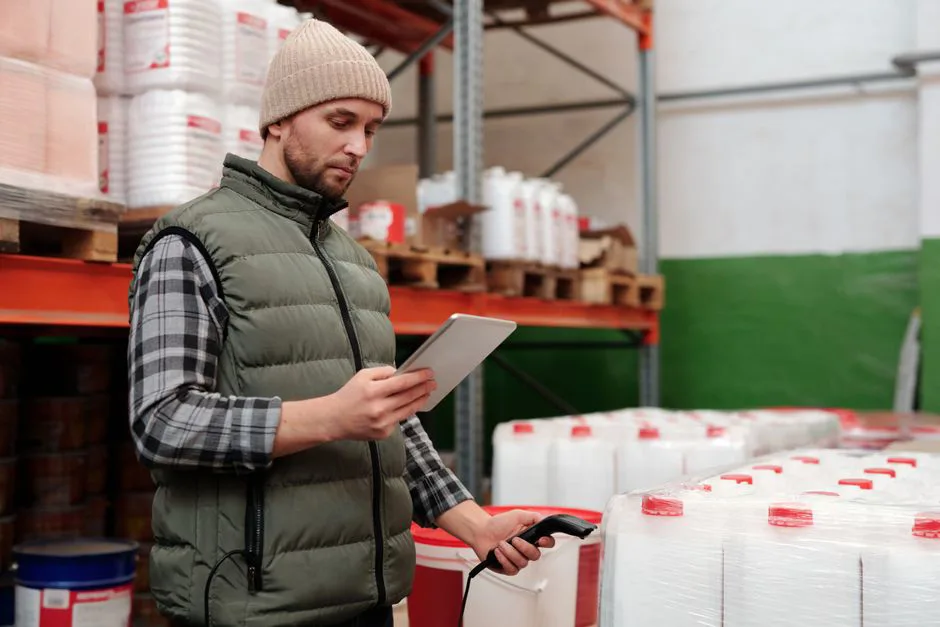
Step 1: Receiving. The product arrives at 425 E. Coma Ave, Hidalgo, TX. Within 4–5 hours, it is inspected, scanned, and entered into Obserway's inventory system. The team checks for damage, verifies quantity, and updates your inventory dashboard in real time. If the shipment includes multiple SKUs, each is individually barcoded and logged against your order.
Step 2: Customs Preparation. The team prepares the necessary customs documents—commercial invoice, packing list, and if required, the new Electronic Value Manifest (mandatory since June 2026). They verify the HS code and confirm eligibility for de minimis or commercial clearance. For shipments that contain goods from different origin countries, the team also ensures that country-of-origin markings are correct to avoid tariff misclassification. If any documentation is incomplete (e.g., missing certificate of origin for a USMCA claim), the team contacts you immediately to supply it, rather than holding the shipment.
Step 3: Same-Day Departure & Clearance. The product is loaded onto a truck bound for Monterrey. Simultaneously, the customs broker submits the clearance electronically. Because the Hidalgo warehouse is only a few miles from the Pharr-Reynosa International Bridge, the crossing is quick. Customs clearance is often finalized before the truck reaches the border. In some cases, the clearance is released while the truck is still on the US side, meaning there is zero wait time at the border. The driver carries a printed copy of the clearance confirmation as a backup.
Step 4: Arrival at Monterrey Warehouse. Once in Mexico, the shipment arrives at Obserway's full-function Monterrey warehouse. Here, it can be stored, prepped for Amazon FBA (labeling, bundling), or dispatched directly to the customer via local carriers. The Monterrey warehouse operates with the same WMS as Hidalgo, so inventory levels are synchronized instantly. If you use EasyCentral, you’ll see the stock move from “in transit” to “available in Monterrey” within minutes of arrival.
Step 5: Last-Mile Delivery. The product reaches the Mexican customer. Obserway provides tracking throughout, and if any issues arise, the Mexico-based call center (Spanish-speaking, 24/7) handles customer inquiries directly. For Amazon FBM sellers, the tracking number is automatically uploaded to your seller central account, improving your valid tracking rate (VTR). For FBA sellers, the Monterrey warehouse ships to Amazon Mexico fulfillment centers, often arriving at the FC within 24 hours after prep.
Now consider an alternative scenario: a seller who uses FBA. Instead of fulfilling individual orders, the seller sends a bulk container to Hidalgo. The same-day clearance process applies, but the goods are then stored in Monterrey until Amazon sends a replenishment request. Obserway’s system can automatically trigger a prep and shipment to the closest Amazon Mexico FC when stock falls below a threshold you set. This proactive replenishment prevents stockouts and reduces the need for emergency air shipments. Another scenario involves high-value electronics that exceed the de minimis threshold. In that case, Obserway handles the full commercial entry, including duty payment (which can be billed to you or deducted from your postpaid account). The warehouse team also applies any necessary customs seals or tamper-proof packaging to comply with Mexican import requirements.
Comparison: Traditional Multi-Provider Model vs. Obserway's Single-Flow Network
Traditional Model: US warehouse (takes 1–2 days to process) -> separate customs broker (adds another day) -> Mexican warehouse (often just for cross-docking) -> carrier. Total time: 4–6 days. Cost: multiple invoices, coordination overhead. Returns: require a separate Mexico address, often a PO box that doesn't accept bulky items.
Obserway's Model: Hidalgo warehouse (same-day process + clearance) -> Monterrey warehouse (full storage + order prep) -> last-mile carrier. Total time: 2–3 days. Cost: single monthly invoice. Returns: Monterrey warehouse accepts all returns, inspects, restocks, or disposes. The difference is not just speed; it's control. With Obserway, you see the entire pipeline from a single dashboard, including real-time customs status and inventory levels across both warehouses.
Let’s break down the hidden costs of the traditional model. Managing multiple vendors means you may pay: a receiving fee at the US warehouse, a separate customs broker fee (often $50-100 per entry), a storage fee at the Mexican cross-dock, and a last-mile delivery surcharge for handling international documentation. These fees can add $3-5 per order compared to Obserway’s consolidated pricing. More importantly, the traditional model exposes you to double handling—goods are unloaded and re-loaded multiple times, increasing the risk of damage and loss. For delicate items like consumer electronics or glassware, this could mean higher return rates and negative customer feedback. Obserway handles each shipment only twice: once at Hidalgo and once at Monterrey, with a seamless truck transfer in between.
Another subtle advantage of the single-flow network is data consistency. In the traditional model, each vendor has its own tracking tool: the US warehouse gives you a receipt number, the broker provides a customs reference, the carrier offers a waybill—none of which are linked. If a customer asks “where is my order?” you have to contact three different entities to piece together the status. With Obserway, one tracking ID covers the entire journey. The dashboard shows: “15:00 – Received at Hidalgo, 16:30 – Customs filed, 17:00 – Departed Hidalgo, 18:45 – Cleared customs, 22:00 – Arrived Monterrey.” This transparency reduces support tickets and builds trust with end customers.
Benefits for Amazon FBA and FBM Sellers
For Amazon FBM sellers, the ability to ship from a US warehouse with same-day clearance means you can offer delivery times that compete with Prime, without having to stock inventory in Mexico. For FBA sellers, the Monterrey warehouse acts as a prep center: you can send bulk shipments from Hidalgo, have them prepped (barcoded, poly-bagged, labeled) in Monterrey, and then shipped to Amazon Mexico fulfillment centers. This reduces the cost per unit compared to shipping directly from the US. Moreover, Obserway's system helps maintain Amazon account health by providing timely tracking updates and handling returns quickly, preventing negative feedback from unresolved issues. The company also offers support for removing negative feedback and handling account violations—though outcomes depend on Amazon's decision, not Obserway's.
Let's look at a concrete financial example. A seller ships a 10-pound product (dim weight 12 lbs) from a US warehouse directly to Amazon Mexico FC. The cost for a small parcel carrier (e.g., UPS to a US address then forwarder) might be around $18–$25 per unit, plus an $8 customs processing fee. Using Obserway’s network, the seller can ship a pallet of 100 units from Hidalgo to Monterrey for a bulk rate of roughly $1.50 per unit, then pay $2.00 per unit for FBA prep in Monterrey, and then $4.00 per unit for local delivery to the FC. Total cost: about $7.50 per unit—saving over 60%. Even after accounting for storage and handling, the savings are substantial, especially for high-volume sellers.
Another key benefit is inventory flexibility. For FBM sellers, the Monterrey warehouse can stock popular SKUs for immediate dispatch, while the Hidalgo warehouse serves as a forward staging area for less predictable demand. This two-tier inventory strategy minimizes the risk of overstocking in Mexico while still offering fast delivery. For seasonal products (e.g., holiday decorations), sellers can send their entire seasonal inventory to Hidalgo in advance, then release small batches to Monterrey as orders come in, avoiding large storage fees in Mexico during off-peak periods. This “just-in-time” approach, enabled by real-time inventory synchronization, keeps carrying costs low.
Handling Returns and Post-Sale Support via the Mexico Warehouse
Returns are a major pain point for cross-border sellers. The National Retail Federation's 2025 report found that online sales have a 19.3% return rate. For sellers targeting Mexico, without a local warehouse, returns often mean high shipping costs back to the US or abandoned inventory. Obserway's Monterrey warehouse is not just a forward stocking location; it is a full-service returns center. When a customer returns an item, it goes to Monterrey. There, it is inspected, tested if needed, and either restocked for resale on Amazon Mexico or your own store, refurbished, or disposed of according to your preferences. For FBA sellers, Obserway can handle the return process end-to-end, from customer communication to refund initiation, ensuring that returned items don't hurt your account metrics. For FBM sellers, the Monterrey warehouse acts as your Mexico-based return address—crucial for sellers using Shopify, Etsy, or their own websites.
The returns process is fully documented and visible in your dashboard. When a return is received, you get an automatic notification with photos of the item’s condition, a grading (like new, acceptable, defective), and a disposition suggestion. You can then approve restocking, refurbishment, or disposal instantly. For items that are still sellable, the warehouse can re-label and repackage them for immediate resale, often within the same business day. This rapid turnaround minimizes the time inventory sits in limbo. In the traditional model, returned items might take a week to reach a US-based returns center, costing you both time and money. With Obserway, the entire return-to-resale cycle can be completed in 48 hours.
Post-sale support extends beyond returns. The Mexico-based call center (Spanish-speaking, 24/7) can handle customer inquiries about delivery status, product usage, or exchange requests. For FBM sellers, this means your customers never have to call a US number or wait for an email response in English. The call center agents are trained to handle typical ecommerce issues and can even initiate a replacement shipment from the Monterrey warehouse without your direct involvement, using pre-set parameters you define. For example, you can set a rule: “If a customer reports a damaged item under $50, automatically ship a replacement from Monterrey and issue a prepaid return label for the damaged item.” This kind of automation reduces your workload and delights customers with instant solutions.
Frequently Asked Questions
How long does it take for a shipment to go from Hidalgo to Monterrey?
Typically, the crossing from Hidalgo to Monterrey takes less than 24 hours including customs clearance. The physical distance is about 200 miles, but the key is that customs paperwork is done in parallel with the truck movement. Most shipments are available for processing at the Monterrey warehouse within 36 hours of leaving the US warehouse.
Do you handle Amazon FBA prep in Mexico?
Yes. Obserway's Monterrey warehouse offers full FBA prep services, including labeling, poly bagging, and bundling per Amazon Mexico requirements. You can ship bulk units from Hidalgo and have them prepped and sent to Amazon fulfillment centers in Mexico, saving on international shipping costs per unit.
What if my shipment exceeds the USMCA de minimis thresholds?
Obserway handles commercial clearance for higher-value shipments. The team prepares a full customs entry, coordinates with customs brokers, and ensures all duties and taxes are paid upfront. The same-day process still applies; the difference is that the clearance requires more documentation, but the warehouse team manages that on your behalf.
Can I use your network for dropshipping from the US to Mexico?
Absolutely. Obserway's Hidalgo warehouse is ideal for dropshipping. When a customer orders, you ship the product to Hidalgo (or have it sent from your supplier directly), and Obserway handles the rest: customs, storage, and last-mile delivery. The Mexico warehouse also handles returns, so your customers have a local address for sending back items.
How does the Mexico call center help my business?
The Mexico call center provides Spanish-language support to your customers. They can track packages, resolve delivery issues, and handle returns—all in the local language. This reduces the burden on your US-based support team and improves customer satisfaction. For Amazon sellers, this can lead to fewer negative feedbacks related to communication.
What software integrations do you support?
Obserway integrates with EasyCentral and MongerLab for inventory management and order synchronization. You can see real-time stock levels across both warehouses, create shipments, and track order status from a single dashboard. The Obserway Assistant Chrome extension also allows quick label generation and tracking from your Amazon or Shopify seller central page.
Can I send hazardous materials (Hazmat) through Obserway?
Yes, with some restrictions. Obserway can handle limited quantities of Hazmat items (such as lithium batteries in devices, paints, or cleaning products) as long as they comply with US and Mexican regulations. The team will verify the Safety Data Sheet (SDS) and ensure proper labeling and packing. Shipments containing Hazmat may require additional handling time and are subject to cargo airline or carrier restrictions, but Obserway will guide you through the process. You must declare the Hazmat nature at the time of booking; failure to do so can result in customs penalties.
How do you handle inventory discrepancies between the two warehouses?
Obserway’s real-time inventory synchronization minimizes discrepancies. Each time inventory is moved—whether by transfer between warehouses, sales, returns, or adjustments—the system updates the central inventory ledger instantly. If a discrepancy arises (e.g., a physical count difference during a cycle count), you are notified within 24 hours, and the Obserway team investigates the cause. For Amazon sellers, the system also reconciles your Amazon inventory reports with Obserway’s records twice daily, so you can identify any mismatches early. In the unlikely event of a loss, Obserway’s insurance policy (available upon request) covers eligible claims up to $100,000.
What are the requirements for shipping B2B wholesale orders to Mexico?
Obserway handles B2B wholesale shipments just as efficiently as DTC orders. For commercial shipments, you need to provide a commercial invoice, packing list, and (for USMCA claims) a certificate of origin. The team can also help you obtain a Mexican tax registration (RFC) if you plan to sell to Mexican businesses regularly. B2B shipments often require a more detailed classification of goods (tariff code at 8-10 digits), but Obserway’s customs specialists manage that. They can also consolidate multiple B2B orders into a single truckload to reduce per-unit shipping costs.
One Line. One Flow. Start Today
The traditional multi-vendor approach to US-Mexico cross-border ecommerce is outdated. By consolidating your logistics into a single two-warehouse network, you eliminate handoff delays, gain visibility, and improve customer experiences. Whether you sell on Amazon FBA, FBM, Shopify, or your own site, Obserway's network from Hidalgo to Monterrey keeps your operation streamlined. Learn more at obserway.com or contact our team to build a fulfillment model tailored to your volume.
About the Author
Robert Hayes — Warehouse & Fulfillment Operations Lead
Robert writes about Obserway's US warehouse receiving, fulfillment, and returns operations, walking through the practical steps from intake to returns processing.