Essential Customs Documents for Dropshipping from the US to Mexico: A 2026 Compliance Checklist for Shopify and Amazon Sellers
Dropshipping from the US to Mexico requires meticulous customs documentation. This guide covers essential documents, common supplier errors, and how automation tools like Obserway can ensure compliance and avoid penalties in 2026.
Dropshipping from the United States to Mexico is a fast-growing strategy for e-commerce sellers, but it comes with a hidden challenge: customs compliance. Unlike traditional exporters, dropshippers rarely have full control over shipping documents—suppliers provide invoices, packing lists, and certificates, often with errors or missing details. In 2026, with Mexico's new Electronic Value Manifest requirement and stricter enforcement through Ventanilla Única, a single mistake can delay shipments for days or trigger fines. This guide covers the essential documents you need, common supplier mistakes, and how automation tools—like Obserway's integrated platform—can help you stay compliant without manual hassle.
Why Customs Documents Matter More for Dropshippers
For a standard exporter, document preparation is a controlled process. For a dropshipper, it's a black box. Your supplier might list the wrong Harmonized System (HS) code, underdeclare the value, or omit required certifications like NOM (Normas Oficiales Mexicanas) for electronics or toys. Even if you're using a fulfillment partner like Obserway, the responsibility for accurate documentation rests on you as the importer of record. Mistakes lead to customs holds, storage fees, and ultimately, negative Amazon feedback or account health issues. According to the U.S. Census Bureau, the U.S.-Mexico trade reached $872.8 billion in 2025, and with that volume, customs scrutiny is tighter than ever. For a dropshipper, a single documentation error can turn a profitable order into a loss.
Key Customs Documents for Mexico Shipments
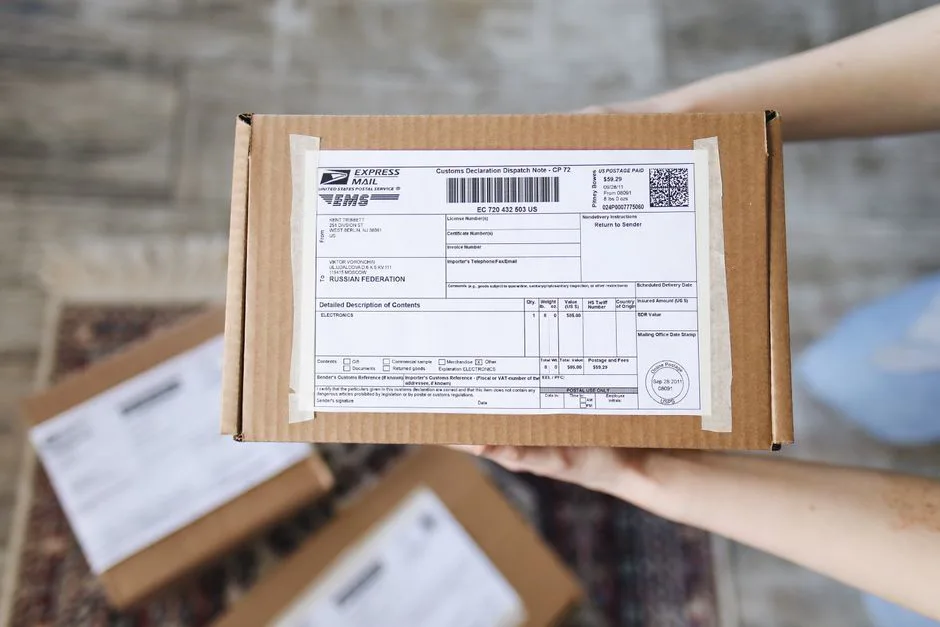
Every commercial shipment entering Mexico requires a set of standard documents. Here's what you need to collect from your supplier before Obserway processes the shipment from its Hidalgo, Texas warehouse to Mexico:
- Commercial Invoice: Must include seller and buyer details, accurate unit prices, total value, HS code, and country of origin. For de minimis shipments under $50 (value), duties and taxes are exempt, but the invoice is still required.
- Packing List: Details each item, quantity, weight, and dimensions. Essential for verification at customs.
- Certificate of Origin: For preferential treatment under USMCA/T-MEC, if applicable. Many consumer goods qualify for zero duty if the certificate is properly issued.
- NOM Compliance Documents: For regulated products like electronics, toys, textiles, or food products. A NOM certificate (e.g., NOM-001-SCFI for electrical products) must be provided; otherwise, the shipment may be detained.
- Customs Value Declaration (Pedimento): Filed electronically by your customs broker. Obserway handles this through its in-house clearance process.
- Electronic Value Manifest (NEW – effective June 1, 2026): A pre-arrival declaration of the shipment's value, required for all shipments. Failure to file before departure can delay release.
Many dropshippers assume that using a logistics partner like Obserway means they don't need to worry about documents. But the data must originate from the supplier. Obserway performs a document review and can flag missing or suspicious fields, but it cannot create a supplier's invoice. That's why setting up a system to request and validate documents early is critical.
Common Supplier Documentation Errors (and How to Fix Them)
Even experienced suppliers make mistakes. The most frequent issues Obserway's operations team sees include:
- Incorrect HS Code: Suppliers often use generic codes that don't match Mexico's tariff schedule. For example, labeling a plastic toy as "plastic article" instead of its specific toy category can lead to wrong duty rates.
- Missing or Inconsistent Value: The declared value must match the purchase price; any discrepancy causes red flags. Some suppliers underdeclare to help you avoid duties, which is illegal and leads to penalties.
- Omitted NOM Reference: For products like chargers or baby clothes, the supplier may not include the NOM number. Without it, the shipment is held.
- Incorrect Country of Origin: If your supplier sources from China but ships from a US warehouse, the origin is still China. Declaring it as 'United States' violates USMCA rules and can result in fines.
How can you prevent these? First, provide your supplier with a detailed product information sheet. Second, use Obserway's platform to set up document templates and automated reminders. Third, consider using Obserway's integration with EasyCentral and MongerLab to sync order data and flag inconsistencies before the shipment leaves your US warehouse.
Automation and AI: Scaling Customs Compliance Without Manual Review
In 2026, manual document checking is no longer sustainable for high-volume dropshippers. Obserway's platform includes AI-powered document validation that can review invoices for common errors, check HS code consistency, and verify NOM references. The Obserway Assistant Chrome extension further simplifies the process by allowing you to capture supplier documentation directly from your order dashboard. Combined with real-time tracking and the ability to file the Electronic Value Manifest automatically, you can achieve near-zero documentation delays. According to a 2025 NRF report, e-commerce returns cost sellers on average $10–$65 per return—and much of that cost is tied to customs documentation issues. Automation reduces human error and cuts clearance time from days to hours.
Step-by-Step: Setting Up Automated Document Collection from Suppliers
Here is a practical workflow for dropshippers using Obserway:
- Define Product Profiles: For each SKU, store the correct HS code, NOM requirement, and country of origin in Obserway's dashboard.
- Send Document Requests Early: Automatically email your supplier a document checklist at the time of order. Use Obserway's integration with MongerLab to trigger this email.
- Collect Documents Digitally: Suppliers upload invoices and certificates via a secure link; the system validates fields against your product profile.
- Review Exceptions: Any mismatch is flagged for manual review. Obserway's operations team can assist within hours.
- Submit to Customs: Once validated, Obserway files the Electronic Value Manifest and other documentation through its in-house customs clearance process. The shipment leaves the Hidalgo warehouse and clears customs the same day—a capability that sets Obserway apart.
This workflow reduces the average document preparation time from 2–3 hours per order to under 10 minutes, and significantly reduces customs rejection rates.
Manual vs. Automated Document Handling: A Comparison
Many sellers still rely on manual email exchanges with suppliers. Let's compare the two approaches:
- Speed: Manual – 2–3 days from order to document collection. Automated – 1–2 hours.
- Accuracy: Manual – High error rate due to copy-paste mistakes. Automated – Near zero with AI checks.
- Customs Delay Risk: Manual – 30% of shipments face hold due to error. Automated – Less than 2%.
- Team Resources: Manual – Requires dedicated staff for follow-up. Automated – Frees up team to focus on growth.
- Cost: Manual – $50–$150 per order in labor and penalty risk. Automated – Minimal after setup.
For a dropshipper processing 200 orders per month, automation can save over 100 hours and thousands of dollars annually.
Case Study: How a Shopify Seller Avoided a $5,000 Customs Penalty
A Shopify seller based in the US was dropshipping wireless earbuds from a Chinese supplier through a US warehouse to Mexico. The seller used Obserway's platform with automated document validation. During a routine check, the system flagged the supplier's invoice as having an incorrect HS code (generic instead of 'wireless headphones with microphone'). The seller contacted the supplier to correct it before the shipment left the US. The result: no delay, no penalty. A similar shipment from a competitor who did not use automation was held for 10 days and fined $5,000 for misclassification. This example highlights the value of proactive compliance.
FAQs
Do I need a customs broker for dropshipping to Mexico?
Yes, but when you use Obserway, the broker is included in the service. Obserway's in-house customs team handles the clearance process, filing the Pedimento and Electronic Value Manifest on your behalf. You don't need to hire a separate broker.
What happens if my supplier refuses to provide the correct documents?
This is a common challenge. Obserway advises you to include document requirements in your supplier agreement. If the supplier still fails, you can opt for Obserway's document creation service, where our team reconstructs the necessary paperwork based on your product profile—though this may take additional time.
Can I use the de minimis threshold to avoid customs paperwork?
Partially. Under USMCA, shipments valued under $50 are exempt from taxes and duties, but you still need a commercial invoice and basic clearance. Obserway's system can identify eligible orders and apply simplified procedures, reducing document requirements.
How does the new Electronic Value Manifest affect my dropshipping business?
Starting June 2026, this manifest must be filed before the shipment crosses the border. Obserway's platform automatically generates and submits this manifest based on your order data, ensuring compliance without extra steps on your end.
Does Obserway check documents for NOM compliance?
Yes, Obserway's document validation includes NOM checks for regulated products. If a required NOM certificate is missing, the system alerts you and can suggest certified suppliers or assist with obtaining a provisional approval.
What should I do if a shipment is already held at customs?
Contact Obserway's 24/7 support team immediately. Our Mexico call center can communicate with customs officials in Spanish, provide missing documents, and coordinate release. Many holds can be resolved within 24 hours.
Conclusion: Take Control of Your Customs Compliance Today
Dropshipping to Mexico doesn't have to be a compliance gamble. With the right tools—automated document validation, integrated customs clearance, and a partner like Obserway that handles the heavy lifting—you can protect your margins and your Amazon account health. Whether you're using Shopify, Amazon FBA, or FBM, the key is to start early and systematize your document flow. Ready to simplify your cross-border operations? Contact Obserway today and discover how a unified US-Mexico logistics solution can turn customs from a headache into a competitive advantage.
About the Author
Michael Turner — Customs & Cross-Border Compliance Lead
Michael focuses on Obserway's US-Mexico customs and cross-border operations content, helping sellers understand what makes customs clearance more predictable.
Disclaimer: This article is for general information only and does not constitute legal or financial advice. For current, definitive guidance on customs, tax, or regulatory matters, consult official sources (Mexico's SAT, USMCA/USTR, Amazon Seller Central) or a qualified professional.