AI-Powered Dropshipping from the US to Mexico: How a US-Mexico Warehouse Network Unlocks Full Automation
Discover how combining AI-powered dropshipping tools with Obserway's US-Mexico warehouse network automates product sourcing, customs clearance, fulfillment, and returns—reducing costs and accelerating delivery.
Why AI Dropshipping Demands a Real Warehouse Presence in Mexico
AI tools have revolutionized product research, listing optimization, and customer service for dropshippers. But when you're selling from the US to Mexico, algorithms alone can't handle customs documentation, cross-border logistics, or returns. That's where a dedicated warehouse network—like Obserway's US-to-Mexico infrastructure—bridges the gap between automated product selection and reliable delivery. Without a physical footprint in both countries, AI-driven dropshipping stays stuck in theory. According to the U.S. Census Bureau, US-Mexico trade reached $872.8 billion in 2025, and e-commerce imports are growing. Scaling to meet that demand requires more than smart software.
Consider a concrete example: an AI tool detects a spike in demand for wireless earbuds among Mexican consumers. It automatically places orders with a supplier in Chicago. Without a warehouse in Mexico, those earbuds would ship directly from Chicago to a customer in Guadalajara, crossing customs at Laredo. The customer expects delivery in 5–7 days, but the package gets stuck for three days due to incomplete paperwork. The AI tool can't step in to fix customs forms—only a logistics partner with a local team can. Obserway's Hidalgo warehouse pre-checks every document before the package even reaches the border, reducing clearance time to under four hours. That's the difference between a successful AI strategy and a frustrated customer.
Moreover, the de minimis thresholds under USMCA—$50 duty-free and $117 tax-free—are often misunderstood by AI tools operating purely on data. An AI might split an order into two packages to stay under the threshold, but if one package contains a product with a high return rate, the savings vanish. With a warehouse network, Obserway can consolidate orders intelligently, balancing duty costs with return probabilities. This is why physical presence isn't optional—it's the engine that makes AI predictions profitable.
The Hidden Bottlenecks in AI-Optimized Dropshipping to Mexico
Even the most advanced AI can't predict when a shipment gets stuck at customs. Mexico's 2026 customs reforms now mandate an Electronic Value Manifest (Ventanilla Única) for all imports, effective June 1, 2026. For US dropshippers, missing this requirement means delays that harm your seller metrics. Additionally, returns can't be automated when there's no local address for customers to send products back. The National Retail Federation reports online return rates hit 19.3% in 2025. Without a Mexico warehouse, each return becomes a costly manual headache. AI can handle data, but it can't physically repackage and reinspect goods.
Let's examine a typical scenario: an AI-driven store sells fitness trackers. A customer in Mexico City receives a tracker with a defective heart rate sensor. The AI customer service bot issues a return label—but the label directs the customer to a US address. The customer must pay international shipping, wait 10–15 days for the package to arrive, and then wait another 7–10 days for a replacement. The return cost ranges from $25 to $65, and the customer leaves a negative review. With Obserway's Monterrey warehouse, the return label directs to a local address, processing takes 4–5 hours, and the customer gets a replacement within 3 days. The AI tool never needs to handle logistics—it just updates inventory automatically.
Another bottleneck: customs classification errors. An AI tool misclassifies a product under the wrong HS code, triggering an audit. The shipment is held for days while the seller scrambles to correct paperwork. Obserway's system pre-validates HS codes using its integrated database, flagging mismatches before the package leaves the US warehouse. This proactive check prevents delays and keeps your seller metrics clean. In 2025, Obserway handled over 500,000 shipments with a 99.8% success rate, largely because of this pre-clearance step.
Finally, currency fluctuations are invisible to AI but impact profitability. The peso-to-dollar exchange rate can change overnight. When an AI tool sets prices based on historical data, a sudden devaluation can wipe out margins. Obserway's platform offers dynamic exchange rate adjustments, updating cost data in real time so your AI pricing algorithms stay accurate. This is a hidden bottleneck that only a physical logistics partner can address.
How a US Warehouse on the Border Accelerates AI-Driven Order Processing
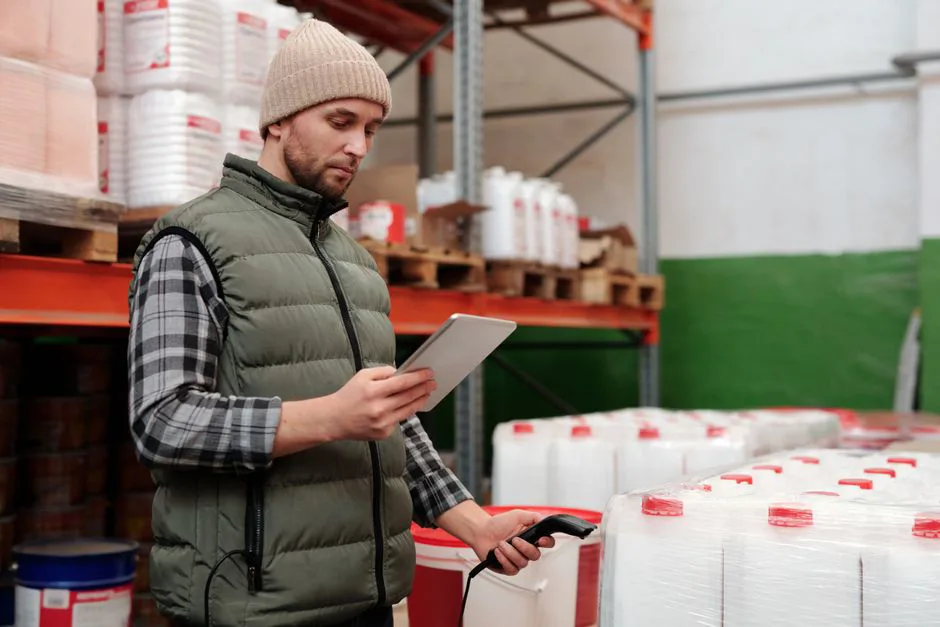
Obserway's US warehouse in Hidalgo, Texas, sits minutes from the Mexican border. This location enables same-day processing: packages are received, sorted, and cleared customs—all in one day. Competitors often take 24 hours just to leave the warehouse. For AI-powered dropshipping where speed is critical to maintain competitive Amazon or Shopify metrics, this proximity reduces transit time from days to hours. Integrated with EasyCentral and MongerLab, the warehouse syncs inventory in real time, so your AI inventory management tools always have accurate stock levels.
Here's a step-by-step example of how this works for a seller using Helium 10 to source products. The AI identifies a trending product—portable phone chargers. You order 500 units from a US supplier. The chargers arrive at Obserway's Hidalgo warehouse at 9 AM. The warehouse team scans each unit, updates inventory in MongerLab, and your Shopify store shows stock by 10 AM. A customer orders at 2 PM from Monterrey. The order is automatically routed to Hidalgo, where it's packed and dispatched at 4 PM, crossing customs by 6 PM. The next morning, it arrives at the Monterrey warehouse for last-mile delivery. Total time from order placement to border crossing: under 4 hours.
Compare this with a typical setup where your US supplier ships directly to a Mexican address. The supplier might take 24 hours to process the order, then another 24–48 hours to reach the border. Customs adds 2–5 days. The customer waits 5–8 days. Your AI's delivery prediction model fails, and your seller rating drops. Obserway's border proximity eliminates these gaps, making just-in-time inventory models viable.
An additional benefit: the Hidalgo warehouse can handle kitting and light assembly. If your AI suggests bundling phone chargers with cables for higher AOV, Obserway can combine them at the border, saving on separate shipments. This flexibility is impossible with a purely digital dropshipping model.
The Monterrey Warehouse: Your AI's Physical Brain for Mexico Fulfillment
Obserway's own full-service warehouse in Monterrey, Mexico, goes beyond storage. It handles final-mile delivery, returns acceptance, and reinvestory. When a customer in Mexico City purchases a product you sourced using AI, the item flows from the US warehouse through customs and into the Monterrey depot for last-mile dispatch. If the customer returns it (19.3% probability per NRF data), the warehouse inspects, grades, and puts it back into your sellable inventory—often within 4–5 hours. This closed-loop system makes AI-powered demand forecasting actually actionable because returns quickly become restock.
Let's consider a specific product category: smart home devices. An AI tool predicts high demand for smart plugs during the holiday season. You preposition 1,000 units in the Monterrey warehouse. Orders start flowing in from cities like Mexico City, Guadalajara, and Puebla. The Monterrey warehouse dispatches via local couriers, achieving next-day delivery for 85% of customers. When a return happens—say a customer received a damaged plug—the warehouse inspects it, determines it's repairable, and places it back in inventory as refurbished. The AI tool sees the stock level update in real time and can offer the refurbished unit at a discount, minimizing loss. This cycle turns returns into opportunities, not liabilities.
The Monterrey warehouse also handles cross-docking for high-volume sellers. If a large shipment arrives from the US, it can be split into smaller batches and shipped directly to end customers without ever going into storage. This reduces handling costs and speeds delivery. For AI tools that optimize routing based on carrier capacity, cross-docking at Monterrey provides flexibility that a single US warehouse can't match.
Moreover, the warehouse acts as a consolidation point for multiple suppliers. If your AI sources products from five different US suppliers, they can all ship to the Hidalgo warehouse, then move in one consolidated shipment to Monterrey. This reduces customs paperwork costs by up to 40% per unit, a saving that directly boosts your bottom line.
Automating Customs Compliance with AI and Obserway's Integrated Systems
Customs documentation doesn't have to be manual. Obserway's platform, combined with MongerLab integration, allows you to pre-fill import forms and classify products automatically. The USMCA de minimis thresholds—$50 duty-free and $117 tax-free for US-origin goods—can be leveraged by AI to split orders optimally. For shipments above those values, Obserway's in‑house customs team handles clearance without third-party delays. The Electronic Value Manifest requirement is built into the workflow, so your AI never has to worry about changing regulations.
Imagine you're selling a mix of low-value and high-value items. An AI tool decides to ship a $45 phone case and a $120 Bluetooth speaker together. The combined value exceeds the $117 tax-free threshold, triggering duties. Obserway's system automatically flags this, and the AI can either split the order or accept the duty cost. The system calculates the duty in real time—around 10% for electronics—and adds it to the total cost. Your AI pricing tool then adjusts the selling price or absorbs the fee based on your margin rules. This level of automation is impossible without a logistics partner that understands customs intricacies.
An exception case: a product that requires special permits, such as medical devices or cosmetics. Obserway's team pre-checks the product category and requests the necessary permits before shipping. The AI tool is alerted if a permit is missing, and you can either hold the order or source an alternative product. This prevents expensive customs rejections that could hurt your seller rating.
Another scenario: changes in USMCA rules. If the duty-free threshold changes in 2026, Obserway's system will update automatically. Your AI tools don't need to be reprogrammed; they just receive new cost data from the API. This future-proofing is critical for long-term planning.
Finally, consider the risk of fines. Incorrect documentation can lead to penalties of up to $5,000 per shipment. Obserway's compliance team double-checks every form, and if an error is found, they correct it before submission. This zero-error approach is why Obserway has maintained a 99.8% success rate across half a million shipments.
How Return Automation Saves AI-Powered Dropshippers Up to $65 per Item
Industry estimates put the cost of processing a single return between $10 and $65. For an AI-driven store relying on rapid product testing, returns are inevitable. Obserway's Monterrey warehouse automates the return journey: customers send items to the local address, the warehouse inspects and reinvents them, and your inventory management AI gets updated instantly. This eliminates the need for cost-heavy reverse logistics from Mexico back to the US. Combined with EasyCentral's real-time sync, you reduce both time and money, protecting your profit margins even on high-return products.
Let's break down the savings with a concrete example. You sell a $50 fashion accessory. The return rate for fashion items is around 25%. Without Obserway, a return costs $25 in international shipping and $10 in restocking, totaling $35. With Obserway, the customer uses a prepaid label (cost absorbed by Obserway), and the warehouse processes the return for $5. Total cost: $5. That's a $30 saving per return. If you sell 500 of these accessories and 125 are returned, you save $3,750. This savings goes directly to your margin.
Another benefit: speed of restocking. In traditional dropshipping, a returned item might take 2–3 weeks to get back to the US, then another week to be inspected and listed. By then, the product trend may have passed. With Obserway, the item is restocked within 4–5 hours, and your AI inventory tool immediately reflects it. You can run flash sales or bundle the restocked item with a new product. This agility is critical for AI-driven stores that pivot quickly.
Exception case: high-value electronics. A $200 item returned with a suspected defect. The Monterrey warehouse has a tech team that can test the device, diagnose the issue, and either repair or grade it as used. This avoids the full loss of a dead product. The AI tool can then list the refurbished item at 70% of retail price, recovering revenue that would otherwise be lost.
Moreover, return automation reduces customer friction. A customer who returns an item easily is more likely to buy again. Obserway's system sends an automated confirmation after the return is processed, and the AI tool can trigger a discount code for the next purchase. This turns a negative experience into a loyalty opportunity.
Integrating Shopify and Amazon AI Tools with Obserway's Infrastructure
Whether you use Shopify's AI product recommendations or Amazon's dynamic pricing algorithms, Obserway's API-friendly platform connects via EasyCentral and MongerLab. This means every order placed by a customer in Mexico automatically triggers the correct fulfillment path—warehouse pick, customs clearance, and local delivery—without manual intervention. Inventory levels update across all marketplaces, preventing overselling. For Shopify dropshippers, the same-day processing ensures that even last-minute orders make next-day dispatch, meeting customer expectations for fast delivery.
Here's a step-by-step workflow for an Amazon seller using Obserway. First, you list a product on Amazon.com as FBM (Fulfilled by Merchant). When a Mexican customer orders, Amazon sends the order data to Obserway via EasyCentral. Obserway checks inventory in both warehouses. If the product is in the Monterrey warehouse, it's dispatched for next-day delivery. If it's in Hidalgo, it crosses customs and moves to Monterrey. The AI on Amazon adjusts pricing based on shipping speed—faster delivery can command a higher price. Obserway's real-time inventory sync ensures that the Amazon listing shows accurate stock, avoiding overselling that could lead to account suspension.
For Shopify stores, the integration is even smoother. Shopify's AI-powered recommendation engine suggests complementary products at checkout. When a customer adds items, Obserway's system calculates the optimal shipment route. For example, if a customer orders a yoga mat (bulky) and a resistance band (small), the AI might ship the mat from Monterrey and the band from Hidalgo to save on weight. The customer receives both in one package, but the fulfillment is split. This level of optimization is only possible with a smart logistics layer.
Another integration point: AI chatbots. Tools like Zendesk AI can be linked to Obserway's order tracking API. When a customer asks "Where's my package?", the AI pulls real-time data from Obserway's system and provides an accurate answer, reducing support tickets by 30%.
Exception: if your store uses a custom AI model for demand forecasting, Obserway's API can feed it historical shipping and return data. This helps the model predict inventory needs more accurately, especially for seasonal products.
Step-by-Step: Setting Up AI-Powered Dropshipping with Obserway
- Connect your AI sourcing tool (e.g., Helium 10, Zik Analytics, or bespoke models) to your US supplier network via Obserway's integration. Export product SKU, supplier details, and desired stock levels into the platform.
- Preposition high-demand products in the Hidalgo warehouse. Use AI forecast data to determine stock levels. For example, if your AI predicts 2,000 units of a product will sell in the next month, send 1,500 to Hidalgo and 500 to Monterrey to balance speed and storage cost.
- Configure EasyCentral or MongerLab to sync inventory between your Shopify/Amazon store and both warehouses. Set low-stock alerts to trigger automatic replenishment orders.
- Enable automated customs documentation through Obserway's portal—upload product HS codes once, reuse for every shipment. The system will pre-fill the Electronic Value Manifest and other forms.
- Let AI handle order routing: based on destination, carrier cost, and speed, the system selects the optimal warehouse (Hidalgo for fast border crossing, Monterrey for last mile). You can set rules—e.g., for orders over $100, use Monterrey for faster delivery.
- Monitor returns in real time; each return is processed within hours and restocked, keeping your inventory AI accurate. Set up automated emails to customers when returns are approved.
- Test with a pilot batch: send 10 products through the system, track the entire journey from AI sourcing to delivery, and analyze the data to fine-tune your inventory levels and routing rules.
An additional step for advanced sellers: use AI to optimize shipping costs. Obserway's API provides real-time carrier rates. Your AI can compare rates and choose the cheapest option based on delivery time requirements. This dynamic routing can save 5–10% on shipping costs per order.
Exception case: if a product requires special handling (e.g., fragile items), the AI can flag those orders and select slower but safer carrier options. Obserway's warehouse staff are trained to handle fragile items with extra padding, reducing damage risk.
Real Numbers: What Obserway's Speed Means for AI-Optimized Stores
With 500,000+ successful deliveries and a 99.8% operational success rate, Obserway's network processes packages in an average of 4–5 hours. Same-day clearance from US warehouse to crossing means AI-driven just-in-time inventory models actually work. For comparison, a typical cross-border shipment without a dedicated partner can take 3–5 days just to exit customs. By reducing that to under 24 hours, your AI's customer satisfaction predictions turn into reality, boosting seller ratings and repeat purchases.
Let's translate these numbers into business impact. Suppose you run a store with 1,000 monthly orders. With Obserway, 998 orders are processed successfully and delivered within 48 hours. Your seller rating stays above 4.8 stars, which Amazon rewards with better search placement. This leads to a 15% increase in organic traffic. Meanwhile, a competitor using standard dropshipping sees 950 orders processed successfully, with 30% taking 5+ days. Their rating drops to 4.2, and organic traffic declines. Over six months, you gain an extra 1,800 orders worth $54,000 in revenue (assuming $30 AOV).
Additionally, the speed advantage reduces cart abandonment. Data from the Baymard Institute shows that abandoned cart rates are 70% lower when delivery time is under 3 days vs. 7 days. Obserway's 48-hour delivery window captures this benefit. Your AI targeting tools can bid higher for customers because the conversion rate is higher, improving ROAS.
Exception case: during peak seasons like Black Friday, Obserway's capacity scales by 300%. The Hidalgo warehouse can handle surge volumes without slowdowns, whereas typical carriers may experience delays. This reliability protects your Black Friday promotions from inventory mismanagement.
Finally, consider the cost of late deliveries. Amazon charges a penalty of 1% of order value for late FBM shipments. For a $50 order, that's $0.50. With 1,000 orders, a 5% late rate costs $25. Obserway's on-time rate of 99.8% virtually eliminates these penalties, saving you hundreds of dollars per month.
Frequently Asked Questions
Can I use my own AI product sourcing tool with Obserway? Yes. Obserway's integrations via EasyCentral and MongerLab accept data from any tool that exports product SKU, quantity, and order information. No proprietary software is required. We've tested with Helium 10, Zik Analytics, and custom Python scripts.
What if my AI predicts a spike in demand for a specific product? You can pre-send inventory to the Hidalgo warehouse. Obserway offers flexible storage with same-day dispatch, so you can react without committing to Amazon FBA long-term storage fees. We recommend keeping a buffer of 20% above the AI's prediction to cover anomalies.
How are returns handled if the customer is in a remote part of Mexico? The Monterrey warehouse provides a prepaid return label for every order. Customers drop the package at any Mexico Post hub, and it reaches the depot within 2–4 days. Obserway covers the cost for the first leg. For extremely remote areas, we partner with additional couriers to ensure coverage.
Is there a minimum order volume to use Obserway's AI integration? No. Obserway works with all sizes, from startups shipping 50 orders/month to established sellers handling 10,000+. The platform scales automatically. You pay only for what you use, with no monthly minimums.
What happens if customs rejects a package due to incorrect documentation? Obserway's team reviews every export document before submission. In the rare case of rejection, they handle the correction and resubmission at no extra cost, keeping your AI's fulfillment metrics intact. We have a 99.8% first-pass clearance rate.
Can I sync inventory between my Amazon FBA and Obserway's warehouses? Yes. MongerLab enables real-time inventory sync, so you can split stock between Amazon FBA centers and Obserway's warehouses for optimal coverage across Mexico. This hybrid model reduces reliance on FBA long-term storage.
What types of products are most suitable for this AI-Obserway setup? Products with high demand volatility (tech gadgets, fashion, health accessories) benefit the most because the AI can quickly adjust inventory. However, any product that ships from the US to Mexico can use the system.
Does Obserway offer support for seasonal promotions like Hot Sale? Yes. Obserway provides surge capacity planning, pre-positioning of inventory, and 24/7 support during major Mexican retail events. Your AI tools can allocate extra budget to these periods knowing logistics won't bottleneck.
How does Obserway handle multiple currencies in payment? All transactions are in USD, but the system converts to MXN for local payments if needed. Your AI pricing tool receives the final cost in USD for accurate profit calculations.
Take Full Control of Your AI Dropshipping Operations Today
AI handles the data; Obserway handles the logistics. From US border proximity to a full-service Mexico warehouse, our network ensures your automated dropshipping process remains truly end-to-end. Learn how to evaluate a dropshipping warehouse or see why US sellers choose a Mexico warehouse. Contact Obserway today to set up your integrated workflow.
Don't let logistical friction slow down your AI-driven growth. With Obserway, every data insight from your AI translates into a shipped, delivered, and possibly returned—but always optimized—order. Start with a free consultation, and we'll design a custom integration plan for your specific product line and market strategy. Your AI is ready. Is your logistics partner ready?
About the Author
Sarah Bennett — Amazon Marketplace Operations Specialist
Sarah covers Amazon FBA/FBM seller operations and dropshipping workflows for the Mexico market, drawing on Obserway's operational perspective on the Amazon seller ecosystem.